Showing posts with label Voter Fraud. Show all posts

Sunday, October 28, 2012

Issue #85 October 28, 2012- Vote!!!


What This Is…
Issue #85- October 28, 2012
In this issue: Vote 

Get Out and Vote…
Early voting started this past week here in Wisconsin and we are less than 10 days away from Election Day.  Elections always matter, but this year's election has taken on extra significance for a variety of reasons.  The rancor of the discourse has amped up the interest as well.  Here in Wisconsin we are not only interested in the national races, but also in the local races that will determine control of our state senate.  A GOP majority in the senate would allow Governor Walker to resume his unobstructed attacks on public services and public employees.

I would guess that for most citizens, November 6th will bring a sense of relief.  Relief from the constant barrage of advertising and the vicious political dialogue that has poisoned our airwaves and media outlets.  Relief from the robocalls and polling.  A chance to return to "Normalcy" and ignore politics for at least a year or two.  Even those of us who have been "awakened" politically feel worn down and in many ways discouraged by our nation's inability to engage in meaningful, polite discourse over the issues of the day.

These feelings of exhaustion and frustration lend themselves to a mood of pessimism.  Pessimism fueled by the ongoing cacophony of attack ads and angry rhetoric that fills our airwaves, mailboxes and newsfeeds.  Citizens of all political persuasions are expressing dissatisfaction with the process and the results of recent campaigns.  We face widespread concern about the validity of our electoral process as well. 

The result is a curious blend of activism and apathy.  On one hand there are a significant number of people who are more involved now than they have ever been, while at the same time a significant number of people are continuing to "opt out" of the voting process.  Look at the turnout in the June recall elections in Wisconsin.  With all the hype and significant reasons for involvement turnout still only reached around the 60% mark.  While everyone trumpeted the record number of voters as evidence of the intense interest we cant forget that 40% of the population still didn't make it to the polls.

There are many reasons for the continuing lack of voter participation in elections at all levels, but in the end there really is no reason that any eligible voter should fail to cast a ballot.  With early voting, absentee ballots mailed to your home, free taxi rides on election day and numerous other "Get Out the Vote" efforts we should see close to 100% participation by citizens fulfilling their most basic of duties. 

Each of us has a responsibility to encourage, cajole and motivate those around us to get to the polls and cast a ballot on, or before November 6th.


            Why I (Usually) Vote Democrat, and Why I Will Do So Again…
I claim to be an independent progressive when it comes to identifying my political allegiances.  However, it sure seems like this means that most of my votes have been given to Democrats.  This excludes a brief relationship that I had with the Republican party in the late 1970's and early 1980's when I was drawn to the color blue that was used to show states that had voted Republican.  I guess it was to contrast with the gray used for Democrats in a time when some viewers still had black and white TV's.  As a Civil War buff I couldn't find a way to support the colors of the Confederacy.  I was also around 10 so my political views were not fully developed either. 

I'm not alone in this and recent elections have only cemented the party affiliations that many of us have.  This is true whether we fully support the party we cast a vote for, or even if we have significant problems with the platforms they put forward.  In a two party system like the one in America today, there is little wiggle room for the independent voter.  It feels to many like we are stuck voting for a candidate because casting a ballot for an independent only serves to lend support to a candidate we oppose. 

I hear dissatisfaction coming from both camps, even though the spokespeople of the different parties do their best to mask dissension and spin any internal conflicts to limit the appearance of disagreement in the party ranks.  Since I am neither a conservative, nor a Republican I won't speak to their squabbles over just how far to the right they would like Mitt Romney/Paul Ryan to veer.  My concern is that the issues that many here in Wisconsin have with President Obama may end up with people casting ballots for negative reasons instead of choosing the candidate that most closely represents their interests while still having a reasonable chance of winning. 

The issues that Wisconsin's progressives have are many and legitimate.  We wonder where President Obama was during our struggles with Governor Walker and why he provided so little support for our efforts to advance causes that he claimed to have such passion for in his campaign of 2008.  We look at his record on education and the fact that worker's rights have continued to erode under his watch.  Many feel that he hasn't gone far enough in speaking out to represent those who supported his candidacy 4 years ago.  In some ways it seemed like our resistance in Wisconsin fueled a change in Obama's words and actions and provided a spark that strengthened his resolve and put him on a path towards becoming the president we hoped to have when we elected him.

Yet, it seems like it may be too little and too late for some voters.  Their dissatisfaction leads them to think seriously about casting a ballot for a 3rd party candidate.  They do this with the knowledge that a vote for anyone but Obama is a vote for Romney.  They do this with a clear motivation and a resolve to make a statement about their perceived lack of choice in this election.  I understand their feelings and opinions and wholeheartedly support their right to cast a ballot as they choose.  No one should be "guilted" or coerced into voting for a candidate. 

I do hope that people consider all their options and cast their vote thoughtfully and with care.  We saw the results of a divided and disconnected electorate in 2010 and are paying a heavy price for those results.  When you compare the election results of 2008 and 2010 you see a huge number of voters who chose to sit out the most recent election.  These voters silenced themselves and now face challenges much more significant as a result. Wisconsin provides an excellent example of a state where this occurred.

On a very basic level it is true that we should cast our votes without thought about strategy or political consequences.  I know that whenever I vote my first criterion is the candidates stance on issues that I feel are important.  Political repercussions are farther down on my list, but certainly have come into play at times.  Unfortunately, there have been elections where I felt I was casting a ballot for the "lesser of two evils".  Luckily for me, the election of 2012 isn't one of those.

The candidates on their ticket aren't perfect, but then no candidate ever is.  In my opinion there are many reasons to get out and vote Democrat in this election.  The most important of these reasons isn't based on any specific position on a single issue.  Based on recent experiences at the local and state level, along with observations of what has happened nationally it appears that the Democratic party offers the best chance for more voices to be heard.  Here in Wisconsin we have seen the GOP use their power to stifle opinion and force legislation and policy through the system without allowing for debate or discussion to occur.    

I know that within any demographic there is a wide range of opinions.  Our nation's system of representative democracy should mean that individual voices will be blended into policy that (if our representatives do their jobs) will trend in the direction that benefits our society.  It may not happen quickly and there will be setbacks, but by allowing for public input and debate between representatives a common interest can often be reached.  Even when we fall short of our aspirations for our nation we still can see trends towards something "better".  If we don't then it is our obligation as citizens to rise up and make our voices heard. 

The key to the process is allowing multiple voices to be heard and for all parties to approach the problem solving process in an open and rational manner that looks beyond individual needs.  Our representatives need to defend the interests of those they represent, but not at the cost of undermining the system or by excluding other opinions from the debate.  We see the GOP trying to silence the voices of a majority of citizens and advance the goals of a minority in many ways.

Voter suppression is one obvious example of the Republican effort to limit participation in the process.  The consequences for our democracy should be obvious and GOP control of any part of our government (local, state, national) will help them in their efforts to seize control of our nation.  


Voter suppression doesn't have to be done through legislation or public policy.  In fact, when done through the workplace or on a personal level it may even have a more damaging effect.  Intimidation and threats are one way to get employees to vote against their own interests.  


Wisconsinites have seen firsthand what happens when this current brand of Republican does when they have full control of the government.  Public debate is silenced and/or ignored and radical policy is implemented without due process.  Who can forget the image of Representative Barca trying to make a point while the role is called to push Act 10 ahead. 

On a all levels our political discourse and culture has changed drastically for the worse.  The rules of our legislatures and political entities are designed to facilitate discussion, but can be manipulated and used to achieve just the opposite.  We have seen the GOP use tactics to stall initiatives that may have helped numerous citizens.   


These types of actions are done, not for positive reasons, but rather to undermine the opposition.  We know that politics is all about public perception and "spin", but to bring our government to a standstill isn't in anyone's best interest.  I should take a moment to address the obvious argument from the conservative point of view, isn't that exactly what the Wisconsin 14 did last spring?  I would argue that the Democrat senators from Wisconsin left the state because due process and legislative procedures were not being followed.  If the GOP controlled legislature in Wisconsin had shown any sign that reasonable debate was going to occur I don't know that the senators would have gone to Illinois.  We won't ever know, but they were facing an unreasonable situation and their options were limited.  There is a difference between making a stand on an issue (one that could result in significant consequences for them) and simple obstructionism for political purposes. 

The fact that the economic policies that these GOP legislators are advancing are not in the best interests of most Americans makes their actions more troubling.  While attacking President Obama's ideas the Republicans are offering an agenda that weakens our nation's economy and harms many citizens opportunities to succeed.  


This is just as true in Wisconsin as it is around the nation.


Dividing the population isn't only done economically.  It is difficult to see how the GOP's policies benefit citizens who are not white and male.  I am hesitant to accuse anyone of racism, sexism or other prejudice.  It is difficult to know another person's true thinking or the reasons for their actions and accusations are often thrown around too quickly.  However, it is just as difficult see how the rhetoric or policies advanced by conservatives benefits groups outside what they consider "mainstream America".       


The divide and conquer approach has been used effectively by the GOP in the arenas of education and labor relations.  In both places we see conservatives using fear and intimidation, combined with some envy and misinformation to pit groups that should be working together against one another.  The result is bad policy that is supported by people who thought they were getting something different.    


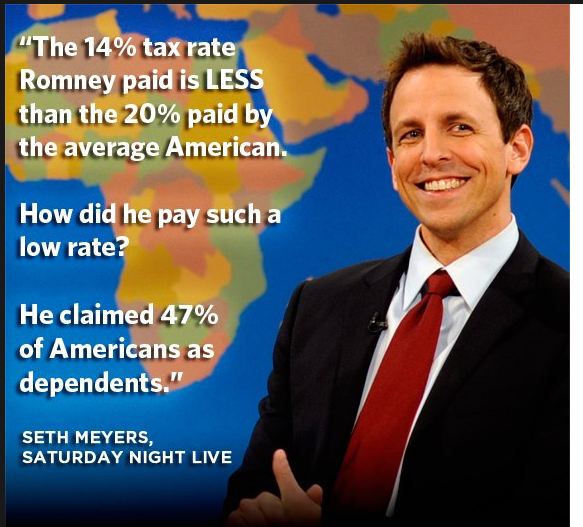
This is a great SNL skit that puts our economic and labor issues in a different light.


In the end, the question remains, who are our representatives representing?  It certainly appears that many of them are not representing their constituents, but rather their large money donors.   


The public struggles to find accurate information that isn't politically motivated.  Any action by any political figure or public event is presented in ways to make a specific candidate or agenda look good.  This is politics as usual, but it is politics as usual on an inflated scale.  The rhetoric around the attacks in Libya provide an example of pain and suffering manipulated for political ends.    


We face a critical election that will have significant consequences.  Our next president will, in all likelihood, make multiple appointments to the Supreme Court.  We face some difficult challenges in foreign policy.  Domestically, we need to address our economic troubles and get our nation moving ahead.  All of these issues demand strong leadership on all sides, statespeople instead of demagogues. 

The progressive philosophy is one that looks for the greater good and emphasizes collective action.  Now is not the time for us to abandon our beliefs or to give in to more aggressive political agendas that claim to be the quickest path to success.  


What started in Wisconsin has been spreading across the nation.  We need to cast our ballots in ways that will allow the movement to continue to grow.  By voting Democrat we won't necessarily get someone who represents our specific interests, but we will allow for debate and discussion to continue.  


There are other, more influential, people who think the same as I do.


In the end, no matter what your stand on politics is, we need to see huge turnouts in the November 6th election.  In Wisconsin it is even more important for progressives to turn out to make sure that the senate retains its Democrat majority.  Every vote counts, make sure to use yours.

Sunday, October 14, 2012

Issue #83 October 14, 2012- Problems with elections, Charter schools and Walmart


What This Is…
Issue #83- October 14, 2012
In this issue: Democracy at Risk, Charter School in Madison?, Support Walmart Workers

A Crisis For Our Democracy…
We live in a time period when everything that happens seems to be a crisis, the most important…, or some grave threat to our way of life.  Of course there are some recent events that are historical in their proportions, but with the constant blaring of 24/7 TV and radio shows, combined with the instant commentary on the internet, it is often difficult to see the real significance of any event/policy/individual.  The competition to be the first to cover a story or to offer some different analysis means that we are flooded with constant hype and rhetoric.

Having said that, it appears that we are at a definite crisis point in our nation's electoral process.  America is a remarkable nation when it comes to the election of new officials and the transferring of power.  We have developed an elaborate system for electing our leaders and (even though many of us don't bother to vote) for the most part Americans have supported and trusted this process.  Our democratic traditions have allowed us to endure significant turmoil and heated debate, while avoiding widespread bloodshed and civil unrest.  A case may be made that there are other, perhaps more sinister, forces that play a role in this as well, but in the end we have developed a relatively peaceful way of putting new leaders in power.  This is especially true when you look at other places around the world and the conflicts that erupt as power is transferred or seized.

Like all human creations, our electoral system has a checkered past and a few inherent flaws.  We've excluded entire groups from participating and witnessed significant corruption during our nation's history.  The system isn't perfect, but at the same time is a process that we can work with and that allows for citizens to voice their opinion in a positive and potentially meaningful way. 

Like most aspects of our nation's government and political structure, the electoral process has seen its share of successes as well as challenges.  What makes our current situation such a crisis in our political development?

Trust in the System- As I mentioned before, our electoral system has never been free of corruption and/or scandal.  If we admit that power has a potentially corrupting influence, then it is logical that at least some of those interested in achieving powerful positions will be corrupt as well.  We've all read about the scandals that have happened in our history and comments about things like "Chicago Politics" or "Political Bosses" aren't met with surprise.  We all recognize that there are individuals and groups that will do just about anything to gain, and hold on to power. 

What makes the current erosion of trust in our electoral system potentially disastrous is that it isn't the candidates involved who are being questioned (that's an important part of the process), it's the system itself and the results of our elections that are under fire.  Conservatives have made it a point to question the validity of elections because of the "rampant voter fraud" that they claim exists (but have little evidence for).  Their solution…voter ID and other restrictions on voting rights.  


Liberals and progressives find flaws on the other end of the voting path, the counting of ballots.  There are significant concerns about the accuracy of the vote tallies as well as the ability to alter the voting totals by "hacking" the machines.  These concerns have been visibly demonstrated in numerous elections recently. 


Whatever the issues about our electoral system may be, the concern is that we are headed down a path where the results of our elections are not viewed as legitimate.  Without meaningful elections is it possible for us to claim we have a democracy here in America?  We need to restore the faith that people have in the process or risk undermining the foundation of our political system. 

Participation in the System- At the same time we are facing a crisis in confidence in our electoral system, we also face the ongoing reality that many Americans are simply not participating in the process.  What is considered a good turnout on election day is often less than half of the potential voters.  This obviously results in skewed election results that favor a mobilized base that consistently votes, while the majority of the citizens of our nation simply accept the results as they occur.  Even in "high turnout" elections we don't get the participation that our democracy needs to be a true representation of the general public. 

The results of this voter apathy are skewed results that represent a minority of the population.  We also see our elected officials losing their accountability to the people they are supposed to be representing.  If most people don't vote, then those elected only need to represent the interests of a small, well connected few.  The long term effects of this are clear as our leaders become more insulated from their constituents and more susceptible to the influence of their donors and vocal supporters. 

There are many reasons that people don't participate in the current system, but as a nation we need to change this pattern in order to regain control of a system that is currently governed by special interests.  Recent efforts have been made to limit participation in the electoral process, but we have also seen actions designed to encourage voters to become informed and involved.  


Another huge problem is the lack of knowledge that many citizens have in how our government works and what the candidates who are running stand for.  The electorate is divided between those who are firmly entrenched in opposite camps.  At the same time there is a significant number of "independent", "undecided" voters who are drifting between candidates and who are susceptible to propaganda and the, often unreliable, information put out by candidates and the media. 

www.nbc.com

In order to have a working system we need our citizens to realize that it is their actions which have created the system we have.  A nation where people have the freedoms that we do will get the government it deserves and we, as voters, need to be accountable for the officials we elect.  It may take some extra time, but the results will be positive for all of us if each person becomes truly and accurately informed and gets involved.


Money and its Corrupting Influence- We can't ignore the impact that big money has on our political system.  Citizens United has changed the political landscape and made our system one that is ripe for purchase by the highest bidder.  This doesn't change the fact that we still elect our leaders and representatives and as citizens need to actively seek out accurate information and recognize what our candidates stand for.  Money is only one of the reasons our system is declining and we need to stop using it as an excuse.  There are many candidates and activists working to counter the influence that large donations have and we should be working to support their efforts. 

Confidence in our Candidates and Political Parties- With all the negative advertising, conflicting information and mudslinging in politics today, it is no wonder that many Americans are disgusted and fed up with politics.  Almost all parties and candidates seem to have changed their campaign strategies away from promoting themselves to attacking their opponent.  This means that we potentially lose our ability to make a choice between ideas and instead vote out of fear or hatred.  Too many voters see their choices as an opportunity to vote for the lesser of two evils.       

Media Coverage and Lack of Accurate Information- Our major media outlets often seem more like gossip magazines and are more focused on small relatively petty issues or surface data than they are on the underlying realities that shape candidates platforms or policies.  In depth, investigative reporting based on facts doesn't seem to get the attention that opinion driven, shallow stories garner.  Whatever the reason, our media outlets have limited their coverage to sound bites and short pieces that repeat information that is given to them by political parties, candidates or special interests.  Anyone who is directly involved in an ongoing story being covered by the news immediately recognizes the differences between the reality experienced and the "reality" reported.

What Do We Do?- All of these problems add up to a significant problem in our electoral system.  The only real answer is for the people of America to decide that they are not going to be manipulated any more.  People of all political beliefs must recognize that it is only a small minority of citizens who are benefiting from the current trends in the system.  The good of the many is not being served by the direction our nation is heading.  If we are going to get the government we truly deserve we must be willing to fight for it. 

Our fight starts by finding accurate sources of information, challenging ourselves to listen to other viewpoints and being an informed voter.  We need to be able to discuss politics with others who may not agree with us.  We must communicate our concerns to our elected representatives in articulate and persuasive ways.  We also must be willing to organize and exert our collective influence when necessary.  The statement "United We Stand, Divided We Fall" has never been more true.       

New Madison Charter School?…
I don't know enough about the situation to make any real commentary about it, but the Madison Board of Education is meeting on Monday 10/15 to discuss making changes in the programming at Toki Middle School.  These changes could result in the school becoming a charter school.  This is a development that is of obvious concern to all of us who fear the potential for privatization of our public schools, and bears careful watching and monitoring.      


Stand With Walmart Workers…
No single company is more representative of the current conflict between corporations, their employees and the well being of our nation than Walmart.  Most of Walmart's employees don't make a living wage and they frequently require public assistance to supplement their low wages.  The company pulls in huge amounts of money, and at the same time benefits from negotiated tax breaks.  Companies that supply products to Walmart are pressured to produce more at a lower cost, thus harming workers at other companies.  Walmart eliminates competitors and drives local businesses out of the market.  Yet, there are those who would hold up Walmart as an example of the "American Free Market" and the success it can bring (to a small number at the expense of many).    
Walmart workers are starting to organize and fight back.  These workers need our support.
   

Sunday, February 26, 2012

Issue #51 Addressing the Achievement Gap, Politics, Mining, Worker's and Women's Rights


What This Is…
Issue #51- February 26, 2012
In this issue: Addressing the Achievement Gap, Political News, Labor, Mining, and Women's Rights  

The Achievement Gap…
There is a growing sense of crisis in Wisconsin and across the United States.  We face challenges to our economic system as we work to deal with a growing gap between the richest Americans and the rest of the population.  We have deep political divisions that threaten the ability of our government to function effectively and to represent its citizens.  It's no surprise that the same sense of crisis has enveloped public education as well.

There is no doubt, but that we could do a better job of educating all students in our public schools.  If there is any positive we can take from NCLB and RTTT it is the fact that the data collection mandated by these policies has increased attention to the unequal results different groups garner from our public education system.  While public attention has been drawn to the Achievement Gaps that exist, those of us who have been directly involved in public education have long recognized (and been disturbed by) the disparity in outcomes. 

It is one thing to recognize the struggles of individuals and groups in a school system, but it is another thing to be able to act to correct the problem.  The variables involved in education are many and daunting.  As we work to directly address the Achievement Gap here in Madison we are seeing the challenges and difficulties clearly.  These challenges are deeply imbedded in our society as a whole and, as such, will need a concerted effort by all to address properly.

The Madison School District's administration has taken a step towards addressing the Achievement Gaps.  The proposal put forth has many strands and seeks to implement a variety of initiatives.  Over the next few months a great amount of discussion and analysis of the proposal will take place.  My hope is that people take the time to form their own opinions about how to best improve our public schools while keeping some of these ideas in mind.

-It is a proposal, not a final plan.  Your input is important.  We should expect that the end result will not satisfy every individual or group.  It is impossible to address the specific needs of all the different interests that exist in the population that our public schools serve.  However, the more voices that are heard in the process, the more inclusive and effective the final plan will be.  Everyone should take the time to read the proposal.


Once you are informed about this initial proposal there are many ways to get involved in the discussion.  The district is offering public forums in a number of locations in Madison.


You can also send letters or emails to district administration and school board members. 


In addition to reading about the specific plan I also believe that it is important to learn more about the issues surrounding public education.  We can debate about the costs and benefits of different aspects of the proposal more effectively if we are knowledgeable about the subjects involved.  Knowledge will help us reach more effective solutions and also help reduce the ability of others to manipulate our opinions based on emotions or sound-bites.  We have seen the damage that can be done when we base our decisions on education based on limited information.  NCLB and RTTT are examples of policies that sound good, but have significantly harmed our educational system in many ways.  


-All groups must participate in an open and honest discussion.  Just attending a session or communicating with administration or our school board aren't enough.  In addition to getting information from a variety of sources we must also listen to each other.  This means accepting another's viewpoint and recognizing the validity of other's concerns and opinions.  If we approach this process as a way to simply advance our personal/group agenda at the expense of all others then the process will result in failure.  We can't forget that each individual's experiences shape the collective whole. 

This means that community leaders and others with influence must encourage their supporters to participate in the discussion.  Educators are very familiar with the problem of getting community members and families involved.  Frequently it is the very groups who are facing the largest challenges who are least represented in discussions which affect them.  All of us must encourage participation either through formal or informal methods. 

I encourage all of us who are committed to making public education work to engage as many people as possible in discussion about this issue.  The more discussion we engage in the deeper our understanding of the problems become.  We will have more respect for each other if we connect in open dialogue and avoid formats that are not interactive.  This may mean leaving our comfort zones, but the results can be very positive. 

-Schools rely on community support and involvement.  Schools don't exist in a vacuum.  The problems that exist in our public schools are influenced by the problems that exist in our society at large.  This means that our dialog about the Achievement Gap becomes more than just an education issue.  If we can address the concerns raised by Achievement Gaps we can go a long way towards making our society a better place for all.  Our communities must be supportive of our efforts and engaged in our schools. 

Community groups, their members and individual citizens need to get accurate information about the schools in the community.  I hope that they will take the time to try and learn about ways that they can help schools effectively educate students.  There are numerous ways to be involved in our public schools.  By getting more community members involved the connections between schools and communities are strengthened and support for education will increase. 

At the same time educators must be willing to accept the opinions and ideas that community members have.  We can't expect a "blank check" and must remember our accountability to our students and our community.  The expertise of educators and our experience should be valued, but educators can certainly learn from others in the community as well.  The most important aspect of this is the idea that the dialog will be based on honest, positive intentions and not on the furthering of a political, social or economic agenda that reaches beyond the scope of education.     

-Educating students costs money.  Much will be made of the price tag associated with the proposal put forward by MMSD administration.  I certainly agree that we can't just throw money at the problems we face and expect them to be solved.  We need to be thoughtful as to how we spend money in education.  At the same time, the reality is that education requires specialized materials and a highly educated and well trained work force.  If our politicians and citizenry is willing to accept the argument that businesses need incentives and support, why isn't the same true for our public schools?


It is important that we analyze the budget associated with implementing any plan.  Yet, I can't stress enough the importance that education has for the future of our society.  The greatest asset of any culture or nation is the people who make it up.  Education provides us with a common core of knowledge and helps establish societal norms.  The fact that we are more willing to spend money on business, sports and war than we are on education does not speak positively of the direction we are headed. 

It is also true that students with the most needs will typically cost more to educate.  They need additional services and specialized attention along with modifications to materials and school environments.  These students drive up the cost of public education, but also represent a great investment.  If we don't educate all our students, what happens to them as adults?  It is also a measure of the moral soundness of a society in the way that those with the most needs are treated.  We need to commit to funding education for all students.


-We can't sell our educational system to the highest bidder.  Schools are not moneymaking endeavors.  One of the most harmful ideas put forward about our schools is that they should be "run like a business".   Groups that see schools as a way to make money do the students in those schools a disservice.  Students are not employees or simple "raw materials".  Each student's individual needs and goals deserve attention that a business model simply can't provide.  In addition to the economic interests that impact education, we can't ignore the fact that political interests play a large role in how education is funded. 


The "crisis" we currently face in education is not helped by groups that seek to privatize education.  While some privatized schools do well, others don't perform as well as public schools.  The idea that we need to completely revamp the entire system is a false and harmful one.  True reforms based on sound educational practices, combined with efforts to engage families can make a huge difference in the educational outcomes for our students.      


-It is important to recognize the past, while at the same time keeping the future in mind.  One of the biggest impediments in creating an atmosphere of open communication and trust in the system is the way that things have been done in the past.  Our history of educating groups outside of the dominant white-male demographic is not overly positive.  When you combine the historical context with the current Achievement Gaps and other issues it isn't hard to see why different groups would disengage from the system. 


Educators can look at their own reactions to the "reforms" pushed on the Federal and state levels to see how easy it is to become disenfranchised and unhappy.  As morale drops so does involvement in policy making.  However, the experiences that educators are currently having can also provide a guide towards increasing involvement in education policy discussions among historically less involved groups.  We can start by recognizing that there are legitimate reasons why people don't offer opinions about things that directly affect them, or their children.  Once we accept that people are interested in improving the system we can begin to find ways to get people engaged in the process of changing things for the better.

The experiences of educators and public employees in Wisconsin over the past year have been overwhelmingly negative.  We have been harmed financially, our rights have been restricted and we have been portrayed in increasingly negative ways.  Unfortunately, this is an experience that many of the groups that are the focus of the Achievement Gap can easily relate to.  Educators have formed networks and organized on social and political levels to try and regain what we have lost.  As we continue our fight we can work to include a wider range of groups who have interests that overlap or run parallel to ours.  Together we can form a larger voice with increased power.  That can only happen if we listen to each other and work to include each other in our efforts.    

We can't change what happened in the past.  We also won't improve our future by simply doing a "180" and thereby harming other groups to correct our past errors.  Instead we must work together to use our current strengths and prepare a path for future successes. 

-Strong leadership is vital in times like this.  When you have such a diversity of needs and concerns it is important that leaders emerge who can articulate and advance the positions of the many individuals involved.  We have a representative democracy that allows large numbers of people to have some voice in our decision making process.  The same holds true in our smaller organizations.  Strong leaders will guide their organizations while responding to the needs of their members.  In my experience, most people want to do something to help in a situation.  People frequently are unsure how to make a difference and leaders can provide direction.  Strong leaders also help bridge gaps between different groups and interests.  The success of the Wisconsin Resistance to the conservative agenda is based on individuals stepping up and taking on leadership roles. 


-We must focus our energy while preserving flexibility.  In the current environment the challenges are many.  New developments come up rapidly and it is easy to lose focus.  In the past few years the number of new initiatives and programs have increased significantly.  Educators are feeling overwhelmed and discouraged by the number of initiatives and the fact that they are often contradictory in nature.  In fact the volume of new initiatives probably is having a negative effect on education as educators scramble to adjust their teaching to fit new directives.  Directives that change on a regular basis.   

While addressing concerns raised by the achievement gap requires a broad view, it is vital that we recognize that our goals are fairly simple.  We want to engage students in meaningful learning so that they achieve to their highest potential.  We also want students to develop a positive view of learning and prepare them for future success.  If we can achieve these things then we will see positive changes in other areas as well.  Every action that we take needs to keep these simple goals in mind. 

In order to meet the needs of students we must be able to be flexible in our responses.  Each student is different in many ways and it stands to reason that each classroom, school, etc. has differences as well.  The idea that we can somehow implement a unified curriculum that will meet all student's needs is unrealistic.   

We can't afford to get boxed in to looking at education in traditional ways.  Students need experiences in many areas and research shows that we can reach students more effectively if we use a variety of approaches and mediums.  Reading, writing and math are important, but we can't ignore the value of music, PE, art, technology, science and social studies for the sake of improving our test scores.  


-Information is powerful and can be dangerous.  We've all seen how data can be used to manipulate opinion and advance a specific point of view.  In our modern world with the communication tools available it is relatively easy to spread information and just as easy to spread falsehoods.  No single person can be an expert in all areas.  We need to find reliable sources of information and utilize them to form our opinions.  As discussion continues on the Achievement Gap proposals we should keep this in mind. 

-It is possible to create a positive environment for most of our students.  Our schools work well for many of our students.  As we work to extend the umbrella of success we should keep this in mind.  I find that most students I meet enjoy school, feel relatively supported and safe and occasionally don't even want to go home at the end of the day.  There are models of success we can look to for guidance as well as models that we can look to avoid.
 

-Our students are only one group involved in public education.  While they are the reasons our schools exist, there are other groups that also need to be considered as we develop plans to address the Achievement Gaps.  Of course educators are directly impacted by changes in our educational system.  However, among educators the impacts are felt in different ways.  "Specials" teachers (art, music, phy ed., LMC and technology) have needs that are different in some ways from classroom teachers.  Support staff like OT/PT, Speech and Language, Psychology, Nurses and Social Workers also have unique issues associated with their jobs. 

We can't forget the hourly staff (custodians, clerical, special education assistants, security staff and others) who have been devastated by the recent legislation and corresponding budget cuts.  Any plan to address the Achievement Gaps must take all of these groups into consideration.  We focus on classroom teachers, but classrooms don't function without support and it is often our students with the most needs who interact with the most adults during a school day. 

In order for students to be successful in school, it is vital that their families feel connected and valued.  Achievement Gaps can be addressed by including families and making communication between home and school more effective.  Families of students in public education are often facing significant challenges which impact their children's abilities to perform well in school.

In addition to all the groups inside schools, the community as a whole has an interest in having a quality public education system that works for all students.  Whether it is for employment purposes, public safety, property values or many other reasons public schools provide a valuable community resource.  In return our communities provide resources that add to the quality of our school systems. 

Public schools are truly a vital part of any community and a necessary part of our society.  Public schools provide a mechanism to bring different groups together and to bridge gaps between different interests, beliefs and cultures.  This makes public education a messy and sometimes controversial part of our society.  However, as our society continues to diversify and change the importance of public education as a unifying force magnifies.  Madison has an opportunity to be a leader in creating a model for public education that works for all, we all need to be a part of making that happen.       

Elections…
Not to be forgotten in all the discussion about the Achievement Gap is the political climate which is impacting all aspects of our society.  While we are in between major statewide electoral events we can't ignore the ongoing political struggles which engulf Wisconsin.  We can use this "break" to our advantage as we work to lay the groundwork for the upcoming, extremely high stakes elections.   


It is also a great time to get informed about the candidates in upcoming elections for Madison School Board as well as keeping up with issues that will impact our electoral process.


We should also continue to share the "alternative facts" that contradict Governor Walker's message about the successes of his policies.


The political climate continues to be toxic here.  The political infighting and the influence of forces from outside Wisconsin have made our state's politics a quagmire of accusations, antagonism and animosity.


‎


We Are All Workers…
There's a certain amount of bitter irony in our current situation.  The level of hostility between different segments of our society have increased exponentially in recent months.  Groups that would seem to have similar interests are divided on political lines and are actively opposing each other in political and economic circles.  We seem to have forgotten the ties that unite us and instead are focused on looking at our differences.   


Yet, history can teach us the dangers of the direction we are headed.  No nation has been able to thrive when the gap between rich and poor becomes too large.  If allowed to operate without control the natural tendency of an economy is concentration of wealth.  However, this leads to widespread suffering and eventually to some form of uprising.  America has been a fortunate nation in that we have had a wealth of resources and an economy that has been able to grow, combined with a political and social system that has created relative stability over our history.  We have been able to allow dissenting voices to have some impact on policy and thereby avoiding major class conflicts.

With the current direction of centralization of political power coinciding with the concentration of wealth we face a mounting challenge to our democratic institutions.  If the voices of labor, women, different racial and ethnic groups and other non-"majority" groups are stifled then the tension in our society will increase to a dangerous level.  We've seen this happen several times in our nation's history and have been able to recover to some degree.  However, it has taken heroic efforts on the part of the oppressed groups to counter the conservative forces that seek to maintain the status quo.       


While the current conservative agenda being advanced in Wisconsin isn't unprecedented, it certainly is taking the fight to a level not seen here in a long time.  It is up to all of us to unite to restore a balance to our political and economic systems.

Mining…
The issues raised by the controversies over the mining bill here in Wisconsin continue to provide examples of the problems we face in developing sound public policy for the good of all.  There are many questions that have been raised by the debate and they all point to the difficulty involved in making decisions in such a divided climate.

-The differences between regions of Wisconsin are highlighted.  The citizens of northern Wisconsin feel like their interests are not valued by political forces from more urban areas in the southern part of the state.  However, we live in a time when we can recognize that our environment is connected and what happens in one part of the state influences other places. 


-Different groups have different interests and needs.  Our government continues to ignore or violate the rights of other groups like the Native American tribes who are sovereign nations with treaty rights.  


-Outside forces seek to impose their agenda on our state.  The proponents of the mining bill are heavily influenced by companies from outside Wisconsin.  Along with the outside interests comes the seemingly inevitable political wrangling as legislators seek to promote the causes of their financial backers.   


-Data is used to support both sides.  "Experts" from both sides are at odds about the environmental and health impacts of the type of mining in the current bill.

Women's Rights…
It seems that the GOP wants to return us to the "Good Old Days".  They would impose a view of the world that minimizes the importance of anyone who is not a white, male, business owner.  Legislation designed to institute morality as defined by a small group of people is being forced through at a rapid rate.  In order to do this the GOP is promoting a wide range of fear based attacks on a variety of groups.  It seems like no organization is safe from their attacks.


Here in Wisconsin things are no different.  The GOP controlled legislature has once again done the unthinkable. 


One can only hope that people will realize what is being done under our current Republican controlled government and use their vote in upcoming elections.  Given the wide number of different demographic groups negatively affected by GOP policies it is difficult to imagine that they could retain power.  However, any change in political power hinges on an electorate that votes using accurate information and not one that falls under the media spell cast by the GOP and their financial backers.