
Statewide
Politics…
All elections matter,
however, not all elections get the attention that they deserve from the general
public. Far too many voters turn out to
cast a ballot every four years during a presidential election. They sit out the other elections for many
different reasons, but the results are damaging to our democracy. Because of voter indifference, apathy or
disillusionment a small number of committed voters can essentially dominate
democracy and can fill elected positions with individuals who share a
particular political ideology.

Supreme court elections in
Wisconsin are
frequently low turnout races. Recently
they have been increasingly bitter and partisan, leading to calls to change the
way our justices are selected. Some of
those who are seeking change feel that a nomination process (similar to the way
U.S. Supreme Court Justices are selected) would result in improvements in the
process and results. Of course, we have
seen that the nomination process at the federal level is filled with
partisanship and doesn't guarantee a qualified, unbiased court.
Whether we elect or
nominate our justices isn't as important as the reality that we need to see
increased participation in the process.
This is obvious if justices are elected, but if they are nominated then
those doing the nominating and confirming are still elected by a disturbingly
small number of voters. Either way, the
majority of people don't make their voices heard, until it's too late.
The people of Wisconsin need to wake
up and realize that all elections matter.
Too often people don't see politics as something that impacts their
lives until after their ability to influence the process has gone past. We saw this in the election of Scott Walker
where a significant portion of the population that voted in 2008 sat out the
2010 election. Once the population of Wisconsin realized their
error, it was too late and the recall effort faced an uphill battle that
ultimately was unsuccessful.

Lies
Become Truth…
There are many political
lies that, when repeated frequently, become political realities. We are bombarded with rhetoric that leads us
to believe certain things are true, or that there is an issue that needs to be
fixed, or that we are in some type of crisis.
One of the most prevalent is the myth of the "Job
Creator". Republicans would have us
believe that any wealthy American is a potential job creator who needs to be
protected from the vicious governmental forces that are out to steal their
wealth away. All the rich want to do is
make money so that they can help the rest of us. This has given us economic ideas like
"Trickle-down Economics". It
has also given us the reality that we live in today, where the gap between the
rich and the rest of us is widening exponentially.


Another
myth, this one a crisis, is the idea that our electoral system is fraught with
fraud. There is little evidence for the
accusations, but conservatives will cite potential examples of fraud to
generate fear about the process. They
use rumor and innuendo to create an atmosphere of mistrust. Then once the trust of the public is weakened
they use their rhetoric to promote restrictions on voting. The whole time their agenda isn't to hold
fair elections, but to hold on to power.

What
about the rhetoric that the GOP uses to undermine the credibility of their
opposition? Republicans claim to
represent the "common taxpayer", the everyday citizen who is
struggling to get by in a world dominated by special interests and "big
government". They support these
claims through rhetoric and claims that are too often unsubstantiated. Many times these are efforts to "buy the
silence" of the voters by placating them with small gifts after taking
away things of significance.
Take
the tax breaks that the Wisconsin GOP wants to give the taxpayers of our
state. The whole amount of tax savings
sounds impressive, but the reality is that each person will receive less than
$2 per week. This is more of a scam
(like the large class-action lawsuits on TV) than it is a demonstration of real
concern for the everyday citizens of Wisconsin.

Of course, education is an
area where the lies of conservative "reformers" have set the tone for
any discussion about our public schools.
They have put public schools on the defensive by setting unrealistic
goals based on flawed standardized tests and have made public educators into
scapegoats who are portrayed as oppressors of the students and families they
work with. They have framed the debate so
that our educational efforts are reduced to financial and political
debates.
What makes it more
difficult is that we don't deny that Achievement Gaps exist. Educators know that there are students who
are not succeeding in our schools and we are constantly grappling with ways to
change this reality.
"Reformers" prey on this and use the existing gaps to drive
wedges between groups that should be united to improve educational
opportunities for all students.
Suddenly, it is educators and their unions versus students, families and
other members of underserved communities.
Instead of using our energy and resources to improve our public schools
we find ourselves fighting to simply preserve them.

This issue gets to the
heart of the problem. Our society pays
for what we value, and we spend our money to bail out bankers because of their
value, but let public education wither on the vine. We offer tax breaks to companies and
businesses to improve our communities, but bemoan paying taxes to support local
schools. We see efforts made to turn our
schools into pipelines to careers, rather than as opportunities to create well
rounded, educated citizens. Citizens who
will have the knowledge to create their own opportunities, rather than becoming
cogs in a machine built to reward the few at the expense of the many.
There is some good news in
the fight over public education. The
conservative "reformers" may have overreached in their efforts and
are proposing "reforms" that will harm local school districts in
areas under GOP control. This has
resulted in a break in the Republican ranks and the possibility of some
alternative proposals seeing the floor of the Wisconsin
legislature.
Current events are
challenging to analyze. We have seen
just how difficult it is to evaluate and understand events that are occurring
rapidly and that happen in volatile circumstances during the past couple of
years in Wisconsin. Now that we are two years removed from the
events surrounding the passage of Act 10 more information is coming out. It is important that we share all the
information from those turbulent days so that we don't forget what happened and
allow someone else to write the history of our struggle.
Organize
for the Future…
As the struggle continues
here in Wisconsin,
it becomes more and more clear that our best hope for success lies in organizing
ourselves and creating broad based
coalitions to defend the things we value.
Individually, most of us don't have much power or any real ability to
represent our interests. Instead, we
find ourselves to be one of many, trying to make our voice heard. Too often individuals don't feel like their
wellbeing is being looked after, or that the groups, organizations, government
that is supposed to advocate for them is failing to do so.

Part of the problem is
that each of us is ultimately responsible for being our own advocates. Whether it is something relatively simple
like voting, or more complex and challenging, far too many people have "checked
out" and given up on impacting the conditions that they live and work
in. For those that do get involved,
staying engaged over the longer term is often difficult. It is also hard to stay motivated when
success isn't achieved quickly. An
example of this is found among some people who participated in the recall
process in Wisconsin. They feel like they tried to do something,
but weren't heard and therefore have retreated from active roles in any further
actions.
This isn't to be critical
of anyone. The level of energy that was
put forward during the protests and recall efforts probably wasn't sustainable
for most of us. However, while we may
not be able to be as active as we were over the past two years, we can't allow
ourselves to completely disengage from the process. Finding ways to continue the struggle is
important, otherwise any progress made in the recent past will be lost.
This problem manifests
itself when we see people stop advocating their own interests and relying on
others to speak for them. Whether this
means letting an elected official represent us, or an organization like a union
take on that role, the results are the same.
We know that organizations of any size can only represent the views of
some of their members. No group can represent
every interest of every person in it.
Another challenge in
organizing and engaging citizens is the loss of trust and the lack of
hope. For many people it seems like no
matter what they do, their voice isn't heard.
This can be on a larger societal level, or on a more personal
basis. I often hear people express the
idea that what they say doesn't matter because those in charge will just do
what they want anyway. Others express
the feeling that things will never change and the past inequities are the
reality for the future. Whether this is
because of past history that goes back generations, or a more recent phenomenon
the losses are felt keenly by many. This
leads to a lack of faith in any action and results in apathy or unvoiced anger. Two conditions that breed discontent and are
difficult to channel into positive action.
So, we are faced with a
seemingly unsolvable dilemma. On one
hand, most of us don't have the individual power to make change happen, but at
the same time, don't see a place for themselves in any group that could make
positive change occur. It is this void,
or Participation/Advocacy/Engagement Gap, that we need viable organizations and
groups to fill. The potential for
organized people to make positive change is one of the reasons why the existing
leadership of our state and nation is so vehement in their efforts to destroy
unions and dismantle public sector safety nets.

Their efforts have met
with some success. Union membership
nationwide is down and public sector unions in many states, notably Wisconsin, have seen
their power diminished in many ways. In
addition to the visible legislative and policy efforts, anti-union forces have
also worked hard to portray unions in negative ways through the media and other
propaganda. They have used issues like
the Achievement Gaps and public educator unions' efforts to protect their
members working conditions to depict public educators as selfish and unwilling
to change to promote opportunity for all students.
What conservatives too
often fail to mention is, that after dismantling protections for individuals we
are left with a system that is even more inequitable than the one that we have
now. In a world where each person must
advocate for themselves with limited, if any, support, it is the wealthy and
powerful who will thrive. This has been
demonstrated throughout history and there is no reason to believe that things
will change in modern America.
We find ourselves facing
an uphill battle, but shouldn't feel like we are left without hope for the
future. There are many ways that we can
continue to have a voice in the process and to positively impact our society.
One key component to our
efforts to create a socially just society is to hold on to the institutions and
organizations that we currently have.
Those of us still in unions must maintain our membership and become
activists in defending our ability to organize as workers. We need to defend public institutions like
public schools. Institutions which may
not be perfect, but which represent opportunity for change that isn't present
in a privatized world. Public
institutions which are accountable to the public, if the public chooses to hold
them accountable.
These institutions need to
adapt to the modern world that they exist in.
The pressure and accountability that citizens put on them can have real,
positive results.
However, if we keep our
organizing efforts at the group, or larger scale levels, they will not enjoy
the success that they potentially could.
Trust in the system and hope for positive change have been eroded by
past experiences and promises broken. It
is understandable that many groups are frustrated and angry. It is understandable that a significant
number of people feel like any promises made by these larger entities will not
be fulfilled.
The Achievement Gaps
provide us with a clear example of this mistrust and loss of hope. For too many, there is no reason to trust
that anything will change unless the system is dismantled. Yet, in doing so we risk a return to the days
of segregation and a divided society with groups of people separated by race,
gender, religion or other characteristic.
We face an incredible challenge in trying to create a society where we
can value all of our people and not live in fear of advancing one group at the
expense of others.
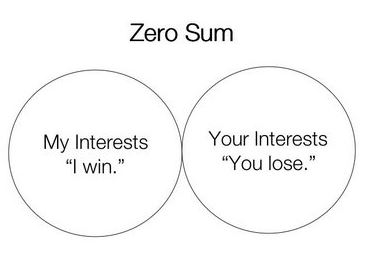
This begs the question,
are freedom, justice and equality part of a zero-sum equation? Is it impossible to raise people up without
putting others down? It would seem to me
that there are some areas where a scarcity of resources means that this is
true, but in the areas where we are dealing with non-tangible ideals, shouldn't
we all be able to rise together?

There are places where the
two worlds overlap. One example would be
funding for education. There are a
finite amount of financial resources, qualified educators and technological
supports available in the world. We see
funding becoming a large part of the struggle as different groups fight for a
piece of the pie. What is ignored is
that our nation has the resources to adequately train, supply and support all
students in their academic efforts. We
simply choose to fund other things. The
military budget, athletics and entertainment all sap resources away from our
schools and into other venues. We aren't
putting our money where our mouth is when it comes to educating our people.
The problems are real and
relatively easy to identify. The
solutions are in some ways just as simple, although not as straightforward to
solve. How do we reach a point where
multiple viewpoints are always a part of our classrooms and society and we
don't need a specific month or day to promote a groups contributions? How do we reach a point where everyone feels
like they have an equal opportunity and separate awards or Affirmative Action
are truly no longer needed? How do we reach
a point where everyone assumes positive intentions from each other and the
difficult issues can be addressed with honesty and trust?
I always tell my students
that trust is one of the most important things we can have in our
classroom. If we can trust each other
then we will accomplish much more than if we don't. Once my students earn my trust I am able to
give them more freedom in their studies and once they trust me we are able to
work so much better together. This is
process that takes time and is a challenging one for many students.

Unfortunately, trust is
difficult to establish, but is very easy to lose. This is just as true in the world outside the
classroom as it is inside the school walls.
Trust isn't something that can be mandated, but must be earned through
hard work and a demonstration of reliability.
We are beginning to realize the level of frustration and mistrust that
exists in many groups in our society.
Often these are the groups that are not enjoying the same levels of
success as other groups. It stands to
reason that, if you have been the object of discrimination and have a history
of unequal treatment that trusting in the larger society would be a
problem.
In order to win that
trust, our organizing efforts must focus on things that matter to all
groups. Too often we see organizations
try and engage people on issues that are of importance to the
organization. Once again, the recall
efforts, and most elections, stand out as examples. Neighborhoods that rarely got visitors from
"outside" were suddenly flooded with volunteers, knocking on doors,
talking to the residents. Asking for
votes to support candidates who may, or may not remember the people who turned
out to cast a ballot for them.
This disconnect between
organizations and their members isn't limited in scope. Every individual member of a group has some
level of frustration or feels underrepresented in some way. In situations of extreme poverty or
discrimination this is magnified, but we all feel like we have to struggle to
make ends meet and to make our interests heard.
One of the real struggles
that unions have faced recently is the perceived need to be engaged in
political issues. Anti-labor forces have
made the workplace into a political battlefield through legislation and policy
designed to directly impact working conditions for unionized labor. As a result unions have had to put
significant resources into political actions that have drained financial and
emotional capital. Unions have been in a
reactive mode and have scrambled to try and hold their ground.
However, in doing so it
may be that unions have forgotten their roots.
Organized labor was born in struggle at a very personal level. Workers rallied and organized to support
themselves and their co-workers on issues of direct importance to them. Political action and politics in general
don't strike the same resonating chord for many members. In other words the battles for the hearts and
minds of labor is fought in the workplace and on the streets more than it is in
legislative chambers. We can't discount
the need to be politically active, but you can clearly see the difference in
engagement among union members when looking at the February, 2011 protests and
the following two years of political action.

It is also important for
organizers to work at the personal or small group level. We are dealing with some big issues and these
are rarely addressed satisfactorily at the "macro" level. We start changing the world at the "micro"
level. You can see that happening in
classrooms across the nation where educators and families are working together
to try and help a specific student succeed. We often see families come in with
"baggage" from previous educational experiences and the adults are
filled with mistrust for the schools. It
takes time and a strong commitment to make change, but in doing so we can break
the cycle and create hope for the future.
Face to face contact and
actions committed with those we know are the most powerful. It isn't easy to trust in a large group or in
our political process on a large scale, but people are able to develop
relationships with those closer to home. The data that shows that most people don't
think public schools around the nation are doing well, but who feel like their
neighborhood school, or their child's educator are high quality, shows this
reality well. Even in organizations like
MTI where a majority of members are supportive and engaged we see the power of
individual contact when trying to mobilize our energy. I've seen this personally at my own school
and in the groups that I've been a part of over the past two years. Making time to talk with people empowers
everyone and opens doors that may have been closed previously.
These are challenging, but
exciting times. There are the obvious
threats to our rights and freedoms, but there are also the opportunities to use
the conflicts to advance our society to new places. This is virtually impossible to do through
legislation, or through mandate from outside sources. It also doesn't happen overnight. Building a society where all are valued and
all have equal opportunity takes time, effort and communication. However, the results would make all of the
hard work worth it.


