Showing posts with label Elections. Show all posts

Sunday, April 6, 2014

Issue #159 April 6, 2014- Money and Society


Class, Money, Elections
and Education. . .
We are well into our third year of intense social, political and economic struggle here in Wisconsin, and there isn't any sign that the conflict will be deescalating anytime soon.  With any extended clash the action ebbs and flows depending on a variety of circumstances and the issues being contested can become distorted and changed as events progress.  What seemed to be clear and well defined issues are altered by the actions and reactions of the parties involved.  Context is such an important part of any interpretation of events, and things change over the course of months and years.  As time passes we also see a loss of focus and a tendency to return to what we are comfortable with. 


Maintaining focus on the issues that caused us to take to the streets in 2011, and that increased our political awareness and participation, is challenging for a variety of reasons.  The intensity of the protests and recall efforts of 2011-12 is difficult to maintain, especially when many of the participants are in such high intensity professions like education.  To expect educators to continue to teach all day, expand their professional knowledge, and to be political activists puts a tremendous strain on each individual.  It is also difficult to fight battles on so many fronts.  Educators are challenged in the political arena, but also are facing significant numbers of challenges professionally as anti-education initiatives portrayed as "reform" efforts are implemented.  Finally, it is difficult to maintain focus on issues that those in power put so much effort into distorting and masking.  Continuing to speak out about the issues that united us in 2011 means cutting through layers of misinformation and staying focused on the true issues. 

Yet, these issues are no less important, in fact the need to keep people thinking about what is really happening in our society is increasing as we move further from the pivotal events of 2011.  The Progressive Uprisings have been met with equally strong responses from the opposition.  The voices of labor, the working and middle classes along with groups that have been historically silenced in political, social and economic debates are being countered by a powerful minority A minority that seeks to maintain a system that segregates the majority of us from accessing the benefits of freedom and equality that our national ideology espouses.

These struggles revolve around some central issues that have been common themes throughout our history.  Of course economics is a central theme in any of these conflicts.  Economic policies show what we as a society value.  They also define success for individuals and groups and are one of the primary ways that power is defined in American society.  Wisconsin has a long history of being an important player in how Americans look at economics and social class.      

Follow workers.org on The author was a member of Milwaukee?s
workers.org

The wealthy in our society use the language of class struggle to justify their own positions on economic issues.  The constant struggle in America to "move up" and to "keep up with the Joneses" puts a strain on all of us.    

The merely rich are making more, but they're not worth more. It's the 0.01 percent that are creating our new Gilded Age.
The Atlantic|By Matthew O'Brien

This strain plays out in a number of ways.  Politicians are constantly forced to choose what views, ideals and opinions they should represent.  As elected representatives of the people they are put in the position of making decisions that impact a diverse group of people.  No district, whatever the size, is 100% unified around any given issue.  Elected representatives choose to cast their vote based on a number of factors, of which remaining in office isn't the least influential.  As the class struggles intensify, the pressure from different groups rises increases as well.  Our political leaders are forced to make choices, and too often they are choosing the elite who can finance the next campaign over the majority of citizens.  

The Journal Sentinel seems to be giving Gov. Scott Walker a pass on his lackluster job-creation record, with no real investigation of why Wisconsin...
expressmilwaukee.com

In order to maintain their influence we have seen significant efforts made by the elite to insure that wealth will be one of, if not the, major influences on our political system.

Originalists used a modern interpretation of the term to eviscerate campaign-finance limits. The Framers would be disgusted.
The Daily Beast

The court's McCutcheon v. FEC decision will empower big donors in states across the country, too.
Mother Jones
Of course, there are the inevitable denials of any sort of effort to buy elections and purchase elected officials.

In The Wall Street Journal, Charles Koch writes that instead of welcoming free debate, collectivists engage in character assassination.
The Wall Street Journal|By Charles G. Koch

The middle and working classes are continuing to try and organize to protect our interests.  Without huge sums of money, individuals must unite to increase our chances of success.

Wondering about what having a union means for you? Hear directly from other Verizon Wireless workers and union members.
youtube.com|By CWAUnion

The conflict spills over from economics, and reaches all parts of our society.  Education has become one of the key battlegrounds where the conflicting views of what our society should be is being fought.  Education is one of the potential equalizers that can balance the playing field and provide opportunities for all citizens.  However, it is also a place where financial influence and political conflicts can create inequity and marginalize large segments of our population.  

Efforts to privatize and profit from our schools have been combined with political ideologies and thus create a potentially disastrous situation for our public education system.  

A battle in NYC shows what happens when corporate-backed schools fight special needs public school kids for space.
AlterNet

Bill continues his conversation with education historian Diane Ravitch about the privatization of public education.
Bill Moyers

Chicago slush. - David Sirota Chicago is the iconic example of all of these trends. A new report being released this morning shows that the supposedly budget-strapped Windy City - which for years h...
preaprez.wordpress.com


Dear Editor: On April 1, Delavan-Darien became one of the first school systems in Wisconsin to be brought to its knees by Act 10. Voters rejected the school referendum asking
madison.com|By Lee Enterprises

The public needs to continue to hear the counter arguments to privatization of public schools.  If we as a society can unite around our public education system, we can provide a foundation to truly build a just and equitable society.   

The education privatizers are trying to convince us that parental 'choice' will solve all the problems in our schools. But the choice they have in mind is to dismantle a once-proud system of education that was nurtured and funded...
CommonDreams.org

Are they really better at it than traditional public schools? A look at the data.
Washington Post

A new study showing explosive growth in student poverty suggests that rather than raising standards and testing students more, the biggest...
Bill Moyers
The Good, The Bad and
The Ugly. . .

The Good . . . Another example of how citizens around Wisconsin are looking for ways to reclaim our state.

Thanks to a movement spearheaded by several concerned Eau Claire residents - including WEAC Retired members Chris Hambuch-Boyle, Gail Halmstad and Pamela Wall - citizens are...
weac.org|By ascedia.com

A classy campaign and a race that put the focus where it should be, on ways to make our schools better for all students.

Race with two minority candidates influenced by unusual endorsements.
madison.com|By Lee Enterprises


The Bad . . . While there is a case to be made for new faces and voices in our government, there is also a need for "veterans" to help guide newcomers and to provide the expertise that comes with experience.  Some of these elected officials are leaving because of the current political climate which leaves little room for compromise and bipartisanship. 

A lot of institutional memory, wise pragmatism and common sense - - 94 years' worth - - went out of the Wisconsin State Senator chamber when...
thepoliticalenvironment.blogspot.com

We certainly wouldn't want professional educators to score our essay exams, would we?

[ post ][ account ]0 favoritesCL >austin >all jobs >et cetera jobs— — —✉☎replyxprohibited[?]Posted: 2014-03-10 11:47am Seeking Talented...
austin.craigslist.org


The Ugly . . . We know that we have a lot of work to do together in Wisconsin.

A new report from the Annie E. Casey Foundation finds African-American kids face huge barriers to success in the Badger State.
madison.com|By Lee Enterprises

Sunday, March 10, 2013

Issue #104- Politics, "Truth" and Organizing for the Future


Statewide Politics…
All elections matter, however, not all elections get the attention that they deserve from the general public.  Far too many voters turn out to cast a ballot every four years during a presidential election.  They sit out the other elections for many different reasons, but the results are damaging to our democracy.  Because of voter indifference, apathy or disillusionment a small number of committed voters can essentially dominate democracy and can fill elected positions with individuals who share a particular political ideology. 

Supreme court elections in Wisconsin are frequently low turnout races.  Recently they have been increasingly bitter and partisan, leading to calls to change the way our justices are selected.  Some of those who are seeking change feel that a nomination process (similar to the way U.S. Supreme Court Justices are selected) would result in improvements in the process and results.  Of course, we have seen that the nomination process at the federal level is filled with partisanship and doesn't guarantee a qualified, unbiased court. 

Whether we elect or nominate our justices isn't as important as the reality that we need to see increased participation in the process.  This is obvious if justices are elected, but if they are nominated then those doing the nominating and confirming are still elected by a disturbingly small number of voters.  Either way, the majority of people don't make their voices heard, until it's too late. 

The people of Wisconsin need to wake up and realize that all elections matter.  Too often people don't see politics as something that impacts their lives until after their ability to influence the process has gone past.  We saw this in the election of Scott Walker where a significant portion of the population that voted in 2008 sat out the 2010 election.  Once the population of Wisconsin realized their error, it was too late and the recall effort faced an uphill battle that ultimately was unsuccessful. 


Lies Become Truth…
There are many political lies that, when repeated frequently, become political realities.  We are bombarded with rhetoric that leads us to believe certain things are true, or that there is an issue that needs to be fixed, or that we are in some type of crisis.  One of the most prevalent is the myth of the "Job Creator".  Republicans would have us believe that any wealthy American is a potential job creator who needs to be protected from the vicious governmental forces that are out to steal their wealth away.  All the rich want to do is make money so that they can help the rest of us.  This has given us economic ideas like "Trickle-down Economics".  It has also given us the reality that we live in today, where the gap between the rich and the rest of us is widening exponentially.     


Another myth, this one a crisis, is the idea that our electoral system is fraught with fraud.  There is little evidence for the accusations, but conservatives will cite potential examples of fraud to generate fear about the process.  They use rumor and innuendo to create an atmosphere of mistrust.  Then once the trust of the public is weakened they use their rhetoric to promote restrictions on voting.  The whole time their agenda isn't to hold fair elections, but to hold on to power.


What about the rhetoric that the GOP uses to undermine the credibility of their opposition?  Republicans claim to represent the "common taxpayer", the everyday citizen who is struggling to get by in a world dominated by special interests and "big government".  They support these claims through rhetoric and claims that are too often unsubstantiated.  Many times these are efforts to "buy the silence" of the voters by placating them with small gifts after taking away things of significance.    


Take the tax breaks that the Wisconsin GOP wants to give the taxpayers of our state.  The whole amount of tax savings sounds impressive, but the reality is that each person will receive less than $2 per week.  This is more of a scam (like the large class-action lawsuits on TV) than it is a demonstration of real concern for the everyday citizens of Wisconsin. 

Of course, education is an area where the lies of conservative "reformers" have set the tone for any discussion about our public schools.  They have put public schools on the defensive by setting unrealistic goals based on flawed standardized tests and have made public educators into scapegoats who are portrayed as oppressors of the students and families they work with.  They have framed the debate so that our educational efforts are reduced to financial and political debates.     


What makes it more difficult is that we don't deny that Achievement Gaps exist.  Educators know that there are students who are not succeeding in our schools and we are constantly grappling with ways to change this reality.  "Reformers" prey on this and use the existing gaps to drive wedges between groups that should be united to improve educational opportunities for all students.  Suddenly, it is educators and their unions versus students, families and other members of underserved communities.  Instead of using our energy and resources to improve our public schools we find ourselves fighting to simply preserve them.  


This issue gets to the heart of the problem.  Our society pays for what we value, and we spend our money to bail out bankers because of their value, but let public education wither on the vine.  We offer tax breaks to companies and businesses to improve our communities, but bemoan paying taxes to support local schools.  We see efforts made to turn our schools into pipelines to careers, rather than as opportunities to create well rounded, educated citizens.  Citizens who will have the knowledge to create their own opportunities, rather than becoming cogs in a machine built to reward the few at the expense of the many.   
                                                
There is some good news in the fight over public education.  The conservative "reformers" may have overreached in their efforts and are proposing "reforms" that will harm local school districts in areas under GOP control.  This has resulted in a break in the Republican ranks and the possibility of some alternative proposals seeing the floor of the Wisconsin legislature.    


Current events are challenging to analyze.  We have seen just how difficult it is to evaluate and understand events that are occurring rapidly and that happen in volatile circumstances during the past couple of years in Wisconsin.  Now that we are two years removed from the events surrounding the passage of Act 10 more information is coming out.  It is important that we share all the information from those turbulent days so that we don't forget what happened and allow someone else to write the history of our struggle.   


Organize for the Future…
As the struggle continues here in Wisconsin, it becomes more and more clear that our best hope for success lies in organizing ourselves and creating  broad based coalitions to defend the things we value.  Individually, most of us don't have much power or any real ability to represent our interests.  Instead, we find ourselves to be one of many, trying to make our voice heard.  Too often individuals don't feel like their wellbeing is being looked after, or that the groups, organizations, government that is supposed to advocate for them is failing to do so.

Part of the problem is that each of us is ultimately responsible for being our own advocates.  Whether it is something relatively simple like voting, or more complex and challenging, far too many people have "checked out" and given up on impacting the conditions that they live and work in.  For those that do get involved, staying engaged over the longer term is often difficult.  It is also hard to stay motivated when success isn't achieved quickly.  An example of this is found among some people who participated in the recall process in Wisconsin.  They feel like they tried to do something, but weren't heard and therefore have retreated from active roles in any further actions. 

This isn't to be critical of anyone.  The level of energy that was put forward during the protests and recall efforts probably wasn't sustainable for most of us.  However, while we may not be able to be as active as we were over the past two years, we can't allow ourselves to completely disengage from the process.  Finding ways to continue the struggle is important, otherwise any progress made in the recent past will be lost.

This problem manifests itself when we see people stop advocating their own interests and relying on others to speak for them.  Whether this means letting an elected official represent us, or an organization like a union take on that role, the results are the same.  We know that organizations of any size can only represent the views of some of their members.  No group can represent every interest of every person in it.     

Another challenge in organizing and engaging citizens is the loss of trust and the lack of hope.  For many people it seems like no matter what they do, their voice isn't heard.  This can be on a larger societal level, or on a more personal basis.  I often hear people express the idea that what they say doesn't matter because those in charge will just do what they want anyway.  Others express the feeling that things will never change and the past inequities are the reality for the future.  Whether this is because of past history that goes back generations, or a more recent phenomenon the losses are felt keenly by many.  This leads to a lack of faith in any action and results in apathy or unvoiced anger.  Two conditions that breed discontent and are difficult to channel into positive action. 

So, we are faced with a seemingly unsolvable dilemma.  On one hand, most of us don't have the individual power to make change happen, but at the same time, don't see a place for themselves in any group that could make positive change occur.  It is this void, or Participation/Advocacy/Engagement Gap, that we need viable organizations and groups to fill.  The potential for organized people to make positive change is one of the reasons why the existing leadership of our state and nation is so vehement in their efforts to destroy unions and dismantle public sector safety nets.  


Their efforts have met with some success.  Union membership nationwide is down and public sector unions in many states, notably Wisconsin, have seen their power diminished in many ways.  In addition to the visible legislative and policy efforts, anti-union forces have also worked hard to portray unions in negative ways through the media and other propaganda.  They have used issues like the Achievement Gaps and public educator unions' efforts to protect their members working conditions to depict public educators as selfish and unwilling to change to promote opportunity for all students. 

What conservatives too often fail to mention is, that after dismantling protections for individuals we are left with a system that is even more inequitable than the one that we have now.  In a world where each person must advocate for themselves with limited, if any, support, it is the wealthy and powerful who will thrive.  This has been demonstrated throughout history and there is no reason to believe that things will change in modern America. 

We find ourselves facing an uphill battle, but shouldn't feel like we are left without hope for the future.  There are many ways that we can continue to have a voice in the process and to positively impact our society.

One key component to our efforts to create a socially just society is to hold on to the institutions and organizations that we currently have.  Those of us still in unions must maintain our membership and become activists in defending our ability to organize as workers.  We need to defend public institutions like public schools.  Institutions which may not be perfect, but which represent opportunity for change that isn't present in a privatized world.  Public institutions which are accountable to the public, if the public chooses to hold them accountable.          
These institutions need to adapt to the modern world that they exist in.  The pressure and accountability that citizens put on them can have real, positive results.

However, if we keep our organizing efforts at the group, or larger scale levels, they will not enjoy the success that they potentially could.  Trust in the system and hope for positive change have been eroded by past experiences and promises broken.  It is understandable that many groups are frustrated and angry.  It is understandable that a significant number of people feel like any promises made by these larger entities will not be fulfilled. 

The Achievement Gaps provide us with a clear example of this mistrust and loss of hope.  For too many, there is no reason to trust that anything will change unless the system is dismantled.  Yet, in doing so we risk a return to the days of segregation and a divided society with groups of people separated by race, gender, religion or other characteristic.  We face an incredible challenge in trying to create a society where we can value all of our people and not live in fear of advancing one group at the expense of others. 

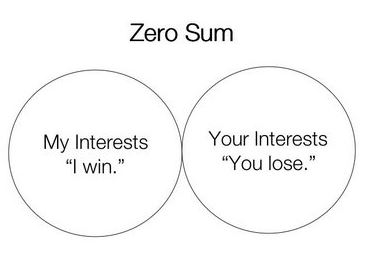
This begs the question, are freedom, justice and equality part of a zero-sum equation?  Is it impossible to raise people up without putting others down?  It would seem to me that there are some areas where a scarcity of resources means that this is true, but in the areas where we are dealing with non-tangible ideals, shouldn't we all be able to rise together? 

There are places where the two worlds overlap.  One example would be funding for education.  There are a finite amount of financial resources, qualified educators and technological supports available in the world.  We see funding becoming a large part of the struggle as different groups fight for a piece of the pie.  What is ignored is that our nation has the resources to adequately train, supply and support all students in their academic efforts.  We simply choose to fund other things.  The military budget, athletics and entertainment all sap resources away from our schools and into other venues.  We aren't putting our money where our mouth is when it comes to educating our people.

The problems are real and relatively easy to identify.  The solutions are in some ways just as simple, although not as straightforward to solve.  How do we reach a point where multiple viewpoints are always a part of our classrooms and society and we don't need a specific month or day to promote a groups contributions?  How do we reach a point where everyone feels like they have an equal opportunity and separate awards or Affirmative Action are truly no longer needed?  How do we reach a point where everyone assumes positive intentions from each other and the difficult issues can be addressed with honesty and trust?

I always tell my students that trust is one of the most important things we can have in our classroom.  If we can trust each other then we will accomplish much more than if we don't.  Once my students earn my trust I am able to give them more freedom in their studies and once they trust me we are able to work so much better together.  This is process that takes time and is a challenging one for many students. 

Unfortunately, trust is difficult to establish, but is very easy to lose.  This is just as true in the world outside the classroom as it is inside the school walls.  Trust isn't something that can be mandated, but must be earned through hard work and a demonstration of reliability.  We are beginning to realize the level of frustration and mistrust that exists in many groups in our society.  Often these are the groups that are not enjoying the same levels of success as other groups.  It stands to reason that, if you have been the object of discrimination and have a history of unequal treatment that trusting in the larger society would be a problem. 

In order to win that trust, our organizing efforts must focus on things that matter to all groups.  Too often we see organizations try and engage people on issues that are of importance to the organization.  Once again, the recall efforts, and most elections, stand out as examples.  Neighborhoods that rarely got visitors from "outside" were suddenly flooded with volunteers, knocking on doors, talking to the residents.  Asking for votes to support candidates who may, or may not remember the people who turned out to cast a ballot for them. 

This disconnect between organizations and their members isn't limited in scope.  Every individual member of a group has some level of frustration or feels underrepresented in some way.  In situations of extreme poverty or discrimination this is magnified, but we all feel like we have to struggle to make ends meet and to make our interests heard. 

One of the real struggles that unions have faced recently is the perceived need to be engaged in political issues.  Anti-labor forces have made the workplace into a political battlefield through legislation and policy designed to directly impact working conditions for unionized labor.  As a result unions have had to put significant resources into political actions that have drained financial and emotional capital.  Unions have been in a reactive mode and have scrambled to try and hold their ground.

However, in doing so it may be that unions have forgotten their roots.  Organized labor was born in struggle at a very personal level.  Workers rallied and organized to support themselves and their co-workers on issues of direct importance to them.  Political action and politics in general don't strike the same resonating chord for many members.  In other words the battles for the hearts and minds of labor is fought in the workplace and on the streets more than it is in legislative chambers.  We can't discount the need to be politically active, but you can clearly see the difference in engagement among union members when looking at the February, 2011 protests and the following two years of political action.        


It is also important for organizers to work at the personal or small group level.  We are dealing with some big issues and these are rarely addressed satisfactorily at the "macro" level.  We start changing the world at the "micro" level.  You can see that happening in classrooms across the nation where educators and families are working together to try and help a specific student succeed.  We often see families come in with "baggage" from previous educational experiences and the adults are filled with mistrust for the schools.  It takes time and a strong commitment to make change, but in doing so we can break the cycle and create hope for the future.

Face to face contact and actions committed with those we know are the most powerful.  It isn't easy to trust in a large group or in our political process on a large scale, but people are able to develop relationships with those closer to home.  The data that shows that most people don't think public schools around the nation are doing well, but who feel like their neighborhood school, or their child's educator are high quality, shows this reality well.  Even in organizations like MTI where a majority of members are supportive and engaged we see the power of individual contact when trying to mobilize our energy.  I've seen this personally at my own school and in the groups that I've been a part of over the past two years.  Making time to talk with people empowers everyone and opens doors that may have been closed previously. 

These are challenging, but exciting times.  There are the obvious threats to our rights and freedoms, but there are also the opportunities to use the conflicts to advance our society to new places.  This is virtually impossible to do through legislation, or through mandate from outside sources.  It also doesn't happen overnight.  Building a society where all are valued and all have equal opportunity takes time, effort and communication.  However, the results would make all of the hard work worth it.             

Sunday, February 24, 2013

Issue #102 February 24, 2013- Primary Results, Organizing and the Budget


Primary Results, Democracy Threatened?…
A few thoughts about the February 19th primary…
The results of the Supreme Court race weren't terribly surprising.  There was little doubt that Justice Roggensack would advance and with the support of many key groups, Ed Fallone, was in good shape to be her opposition in April's election.  We should expect the usual Supreme Court race in Wisconsin to shape up over the next few weeks.  This means lots of rhetoric, lots of money from influential groups, and enough negative advertising to make everyone uncomfortable and frustrated with the process. 
It should be well understood by all Wisconsinites that this race will have a huge impact on our state's immediate future.  The way that legislation and policy is made under the Walker administrations rule insures that our courts will see lots of litigation and will play a pivotal role in deciding what laws and actions are implemented. 
If you remove the obvious connections that Roggensack has to the conservative base in Wisconsin, I still have significant concerns about her philosophy as a justice.  I have always believed that our system of government relied on "checks and balances" between the different branches to prevent any single entity from becoming the sole holder of power.  The Supreme Court exists as the final arbitrator in disputes over the constitutionality of any act by the executive or legislative branches.  Justice Roggensack operates under the belief that she should work to, "…Continue to uphold the legislative intent of the state Senate and Assembly."  A belief that I heard her articulate on Vickie McKenna's radio show last week as well.  Shouldn't our justices work to uphold the state Constitution and not the intent of the legislature?


The low turnout is an embarrassment and demonstrates the unwillingness of our state's citizens to fulfill their responsibilities as the cornerstone of democracy.  Is it really a democratic action if only about 1 in 10 people participate?  The fact that we saw such a poor turnout in a state that should recognize the importance of any election shows us that we still haven't learned our lessons from the recent past.  We must do everything possible to get more people to the polls in April or we will continue to face a government that only represents the few and not the many.

We are becoming a society of special interests and this is undermining our government's ability to govern and our ability to function as a unified nation.  The fact of the matter is that with a small number of voters participating, these off year elections have become an opportunity for special interest groups to insert themselves into the power structure of our government.  With most people sitting out the elections it only takes a small number of dedicated voters to swing an election in any direction.  The candidates who are elected wield the same representative power if they receive the votes of 6% of the population as if they garner the support of 96% of the eligible voters.  Suddenly our "representative democracy" really isn't so representative is it?

Of equal concern is the continuing division of the electorate into special interest groups based on demographics or other unifying interests.  As our nation stratifies along racial, gender, religious, economic or other lines we see less cooperation among groups and more "infighting" between those whose interests are often very similar.  This can be observed in the conflicts that arise in efforts to address issues like the Achievement Gaps in our schools, the disparity in incarceration rates, the economic inequalities that exist in our nation and in countless other areas where we see injustice and inequality in our society.

That our nation has some huge problems dealing with issues of social justice shouldn't be a surprise to anyone.  Yet our ways of dealing with them are in many cases hampering efforts to address the problems we face.  Instead of uniting together and finding common ground we often find ourselves forming task forces, committees, or organizations that in themselves are segregated and divisive. 

As a white, middle-class (for now) male should my opinions about issues of race or gender be of lesser value?  Shouldn't I have just as much interest in resolving the challenges we face and improving the opportunities for all my fellow citizens?  Wouldn't we find more lasting and powerful solutions if our organizing efforts centered around finding common ground across all demographics instead of only reaching out to those who are "directly impacted"?  Aren't we all impacted by the inequities that exist for any of our citizens?

Of course it is difficult to mobilize widespread support for an issue that appears to only impact a smaller demographic group.  Take for example some of these statistics for African-American citizens of Dane County (this information was compiled by the Urban League of Greater Madison).
         
·         In 2011, 25.2% of Blacks in Dane County were unemployed compared to 4.8% of Whites.

·         Just 55.6% of Black men and 62.6% of Black women in Dane County were employed in 2010 compared to 72% of White men and 68% of White women.

·         In 2011, the median household income for Blacks in Dane County was $20,664, less than 1/3 the “median income” of White households in Dane County ($63,673). It was also less than the household income for Blacks statewide ($24,399) and nationwide ($33,223). This means that the majority of Blacks in Dane County live in poverty while most whites are upper middle class.

·         Contrary to what some believe, only 8.1% of Blacks in Dane County drew cash public assistance in 2010. However, this was much higher than the .9% rate among Whites. Additionally, 34.2% of all Blacks in Dane County received Food stamps/SNP benefits because their low-incomes qualified them for it.

·         In 2011, 74.8% of Black children in Dane County were living in poverty compared to 5.5% of White children. The poverty rate among Black children in Dane County was 50% higher than the poverty rate among Black children statewide, and nearly twice as high as the black child poverty rate nationwide. The poverty rate among Black children grew from less than 50% in 2006 to 75% in 2011, while the poverty rate among White children remained stable.

·         In 2010, 86% of all Black, 85% of all Latino, 49% of Asian and 18% of White students enrolled in the Madison Metropolitan School District were poor (qualified for free-and-reduced price lunch). Students of color now comprise 55% of the total enrollment in MMSD (2012-13 school year).

·         In 2011, nearly half (48.1%) of Dane County’s Black third graders failed to meet proficiency standards in reading, compared to 10.9% of White third graders. Similarly, nearly half (47.7%) of Dane County’s Black eighth graders failed to meet proficiency standards in math, compared to 10.4% of White eighth graders.

·         In 2012, 50% of Black students attending the Madison Metropolitan School District (MMSD), Dane County’s largest public school system and the state’s second largest, failed to graduate from high school.

·         Just 3% of Black high school seniors attending all four of MMSD’s comprehensive high schools in 2011-12 were academically ready for college according to high school graduation rates and results from the ACT college entrance exam.

·         In 2010, only 20% of Blacks age 25 and older held bachelor’s degrees compared to 46% of Whites, 14% of Hmong and 22% of Hispanics.

·         In 2010, just 19% of Blacks in Dane County owned their homes while 81% were renters. The same year, 64% of Whites owned their homes while 34% rented. This was the exact same rate of homeownership for Blacks in Dane County 1990.

·         In 2010, Blacks owned less than 1% of all businesses in Dane County, while comprising 5% of the County’s total population.

·         In 2011, according to data provided by the Wisconsin Department of Commerce’s Bureau of Minority Business Development and City of Madison, there were are only four black-owned businesses with 10 or more full-time employees in Dane County.

·         Low marriage rates are also challenging the wealth accumulation and financial stability of Black families more than other groups in Dane County. In 2010, 55% of Black women in Dane County were not married, compared to 33% of White, 40% of Hmong and 35% of Latino women.

·         In 2010, 75% of Black births in Dane County were to unmarried mothers, compared to 20% of White births in Dane County. This was somewhat consistent with national trends, as 73% of Black births and 29% of White births were to unmarried mothers the same year. While births to single mothers were 4 times higher among Blacks than Whites in Wisconsin in 2010, the Black child poverty rate was 14 times greater than that of Whites.

·         In 2006, a study by a University of Wisconsin-Madison professor found that 47% of African American males between the ages of 25-29 in Dane County were either incarcerated, on probation or under some form of court supervision. This percentage continues to hover around 45% with a significant number of men who’ve been released from jail and prison reporting significant difficulties with finding employment.

Startling statistics, definitely.  The Urban League uses these statistics as a rallying call to gather members of the African-American community to work to address them.  I certainly don't challenge the need for members of this community to work to address issues that directly impact them, but also argue that the conditions of any group impacts our community as a whole.  Will any group, operating in relative isolation be able to impact their situation as effectively as the same group operating united with others in the community?  Taking the Civil Rights Movement as an example it appears clear to me that it is only through increasing the diversity in a movement can we hope to create real change. 

The reality of modern America is that a vast majority of our population, independent of race or ethnicity, is losing their ability to influence their socio-economic conditions.  The loss of power is used as a wedge to separate groups and to increase the status and power of those with access to decision makers.  This is another reason why inequality shouldn't be an issue addressed by any single demographic group.  If we don't work to educate and engage all people then we will see a majority of citizens operate under the false assumption that certain issues don't impact them. 


The challenge is to find ways to bring people together and to make the issues of inequality relevant to all people.  It is too easy for any of us to ignore the challenges faced by others and concentrate solely on our own interests.  This problem is compounded by the existing prejudices and stereotypes that members of different communities have regarding each other.  We are a society that is divided in so many ways. 

The problems we face are compounded by the rhetoric and hyperbole that is thrown around in public forums.  For example, there were several comments after the school board primary that Madison's electorate was racist because Ananda Mirilli finished 3rd.  I can't speak for all the voters, but most of the people I know voted for the candidate of their choice based on other criteria than race or even gender.  I also can't speak about the politics that may or may not have gone on behind the scene.  The unfortunate reality of our current situation is that every action is viewed through a lens of mistrust, skepticism and outright dislike for those with opposing views.  This isn't to discount the real racism that does exist, but I believe that to make blanket statements about large groups of people does more harm than good.

The need for unity between groups and diversity in coalitions formed to promote positive change goes way beyond issues around race or ethnicity.  Any group that is working to create a power base to operate from needs to engage multiple groups in order to succeed.  Public employees can't win their fight without the support of all labor.  Defenders of public education can't successfully defend our public schools without going to the community as a whole.  We must even try to engage our opponents in dialog and build relationships with those who have opposing viewpoints whenever possible.  

In the end we must continue to work at the individual level to create unity out of the separations that are entrenched in all aspects of our national culture.  We need to find ways to celebrate our differences while building an identity as a nation that is working towards meeting the lofty expectations that we have so often expressed for our society.  We must remain conscious of our existing challenges while looking towards a future where we can see beyond our differences and recognize the value that every person has in a just and fair civilization.

Education Races…
The upcoming races for Seats 3, 4 and 5 on Madison's School Board will be very important as the district faces important issues and decisions during the next year.  This board will face continuing pressure to privatize our schools in order to address the achievement gap.  It will also be instrumental in the continually evolving labor relations situation that has been created by the actions of state Republicans.  They will also be working with a new superintendent who will very likely bring some new philosophies and ideas to the discussions around Madison's public schools.  

host.madison.com
One of the races, that for Seat #5, changed dramatically as Sarah Manski withdrew from the race.  This just after winning the primary election on Tuesday.
http://m.isthmus.com/article.php?article=39175
Tony Evers also will be involved in an important race for State Superintendent of Public Instruction.  It should be obvious that we public schools in Wisconsin can't afford to have a conservative who supports privatization and cuts to education in office at the state level.  Tony Evers has spoken against the "reforms" offered by Governor Walker and other GOP officials.   

It's Not About Education…
What is immensely frustrating to supporters of public education is the reality that so many of the "reforms" offered to "fix" our schools have very little to do with education.  Instead of addressing the real needs of our educational system, we are seeing initiatives launched that promote profits for a few and advance the goals of special interest groups over proposals that would benefit a majority of our students.
One example of this is the effort to expand the voucher system to more Wisconsin school districts.  Whether these vouchers are for students in general education, or those with special needs the impact on school districts and the families they serve are negative and harmful.      


Even businesses in education aren't exempt from the unfair practices imposed by GOP leaders.


Scott Walker's budget contains many parts that harm our public schools.  We are supposed to be grateful for any increases in funding after decimating public school's finances in the last budget, but these "modest increases" are at best a token offering.  At worst they are a smokescreen to make Walker appear moderate to the masses as we build towards a 2014 gubernatorial race.  If nobody who is directly involved in education seems to support Walker's proposals, then whose interests does this budget represent?  


Budget fight could be looming in the state Senate : Ct

There is no denying that the continuing assault on public education and educators has had an impact on those in the profession. 


We can't afford to ignore the continuing assaults on all public employees in Wisconsin.  Public educators are only one part of the public employee ranks.
host.madison.com