Showing posts with label Campaign Finance Reform. Show all posts

Sunday, December 30, 2012

Issue #94 December 30, 2012- New Year's Resolutions, Guns, Money, Socialism and More


New Year's Resolutions…
It's the time of year when we reflect on the past, but look ahead to a new year with a combination of hope and trepidation.  This past year gave us a mixture of successes and defeats, joys and tragedy.  Given the realities we face in Wisconsin and across the nation, 2013 is sure to bring us more of the same.  In many ways that is simply the way life is, we face all of the challenges as best we can and work to make positive changes where we are able to.  We can't dwell on the challenges that we face any more than we can rest on our "laurels". 

There was a certain amount of irony involved in my reading choice for the past weekend.  I'd been wanting to reread The Shining by Stephen King for a while and with the two snow days we had, finally got my chance.  For those of you who have read this book you can see why reading it during a blizzard might be a little disturbing, but when I reached the end of the book a few lines seemed to jump out at me.  They seemed to tie in with the emotions and thoughts I'd been having as we continue to deal with the Sandy Hook tragedy as well as other issues.  King wrote:

 "There's some things no six-year-old boy in the world should have to be told, but the way things should be and the way things are hardly ever get together.  The world's a hard place,… It don't care.  It don't hate you and me, but it don't love us either.  Terrible things happen in the world and they're things no one can explain.  Good people die in bad painful ways and leave the folks that love them all alone….But see that you get on.  That's your job in this hard world, to keep your love alive and see that you get on, no matter what.  Pull your act together and just go on."

As a society we face many significant challenges, but they really aren't new ones.  They are the same issues that have faced us all throughout history.  We need to continue our struggle to try and make our part of the world better for all.  It is a simple thing, but often so difficult to achieve.  I believe that our nation as a whole would benefit from trying to keep a few of these resolutions in mind as we "go on" in 2013…

-Listen to all sides, really listen.  As we continue to polarize politically and socially we lose the strengths that our nation's diversity offers.  Politics has become a "winner take all" endeavor and it shouldn't be.  Democracy thrives when many perspectives are considered and multiple voices are heard in debate. 

-Keep everyone accountable in meaningful ways.  In our efforts to make our society better we are all accountable to each other and to ourselves.  We keep ourselves accountable when we participate in our society and its institutions.  Everyone has a stake in the process and needs to be sure to hold up their part of the "social contract" that we have all entered into. 

-Show empathy for others.  Too much of what has been happening seems to be vindictive or selfish.  Capitalism may call for individualism, but democracy calls for collective action.  These two may seem mutually exclusive, but we as a nation are engaged in a struggle to try and blend them.  We need to "walk a mile in anothers' shoes" as we try to determine the best course of action for our society as a whole. 

-Have patience with the process.  True democracy isn't about quick fixes.  Its strength rests on debate and incremental change.  Too often we look for the easy, fast legislative or policy fix and are left with a bitter taste in our collective mouths and no lasting results.  The more drastic the act, the more intense the pushback.  Our system doesn't function well when it is used as a "winner take all" system.  Compromise and discussion need to emerge as the driving force in making the changes necessary in our society.

-Recognize that actions and words have consequences, sometimes unintended ones.  We need leadership that looks ahead and recognizes that policies implemented now will have repercussions in the future.  However, it isn't enough to place responsibility for the future on our leaders, we as citizens need to look beyond the immediacy of our current situation and support true leaders instead of voting for the one who promises the most expedient solutions. 

If we could keep these five resolutions at the center of our public debate in 2013 we just might see some real progress made, who knows?     


Arms Race Revisited…
We continue to struggle with the tragedy in Connecticut.  Everyone wants answers, solutions and promises that something like this will never happen again.  Yet, we should recognize the reality, that promises of complete safety are at their best false and at their worst, efforts to manipulate a terrible situation.  We need to have a reasoned debate and come up with long term policies that will help our society come to grips with the widespread violence that grips our nation.

Enter into the debate the NRA.  The group that would have every "qualified" citizen armed to the teeth with the weapon of their choice.  They have used this tragedy as a springboard to inject their rhetoric into the national debate on guns.  The solution to the problem of mass shootings in schools, armed guards and armed staff members.  Their justification…other countries (like Israel) do this successfully.  But, more importantly to them, only the individual can protect themselves and potential (or actual violence) can only be met by more weapons.

The comments by their spokesman about armed guards in schools has been met by significant resistance.  Personally, I don't see how an armed guard can really prevent another tragedy.  Most schools have multiple entrances and so much going on that an armed guard would be rendered useless in a majority of buildings.  The argument that a shooter can go on a rampage on a U.S. military base seems the most telling when it comes to putting armed security in our schools.           


The call has also gone out to allow school staff to carry weapons in school buildings.  That is such a bad idea that it seems almost silly to even discuss, but I know that some politicians will try and make it sound palatable.  They will paint the picture of an educator fending off an attacker and saving lives, while ignoring some realities of a school building.

The primary problem with guns in schools is the problem of gun safety on a daily basis.  When I look at my classroom, and think of the many classrooms I've been in over my 15+ year career, I can't think of any place that a gun would be safe from students hands.  Of course, I could carry it on my person, but anyone who has taught in an elementary school knows that educators spend their day with children all around them in close proximity.  Carrying a weapon would put a barrier between educators and their students.  I can't imagine how I would carry a gun and still do my job.  Since it seems like a significant amount of damage guns do is often accidental, putting weapons in schools seems like an accident waiting for a place to happen.  Storing guns safely would make them virtually inaccessible in the event of an intrusion that would merit their use.  

In the event of a shooting or a dangerous intruder, armed educators wouldn't be free to use their weapons anyway.  Think about it, would you want your child's teacher worrying about using their weapon, or protecting your child by giving them their full attention.  When we do our "Code-Red Drills" I have a lot on my mind, and adding a gun to the equation won't make my students any safer.     


Politics, An Ugly Busine$$…
One of the problems that our nation faces is the reality that our best and brightest are frequently not drawn to public service.  Instead they find their calling in places where they can make significantly more money, and be treated with significantly more respect.

There are many reasons why the political system is such an unfriendly place.  The media constantly is searching for a "scoop" and seeks out controversy.  We've also added another aspect to the media with radio and cable TV shows spewing out rhetoric designed to heat up debate and draw ratings.  No matter what, there will be a significant number of citizens who disagree with any position taken by a candidate or elected official.  Often there are no easy, mutually agreed upon solutions to the difficult problems that our government must deal with.  Put all of these things together and you can see the reasons why many people avoid careers in politics.

However, the biggest reason that our political landscape is such a difficult one to navigate safely is money.  Between the huge amounts of money funneled through different outside organizations and the equally large budget handled by our government the potential for influence, corruption and conflict is magnified exponentially.  Factor in campaign financing and every aspect of politics is significantly influenced by money.          


This isn't a new aspect of U.S. politics, or politics in general, but a couple of things happened recently that drew my attention back to the issue of money in politics. 

First was the announcement that Jim DeMint will leave the senate to head the Heritage Foundation.  His reasoning is that he will be able to have more of an impact in promoting conservative ideals as an "outsider" than as a member of the U.S. Senate.  That this thinking may well be correct is deeply troubling to those of us who believe in the power of democracy and not oligarchy. 


This type of thinking was reinforced by a potential senate candidate with more liberal leanings.  There were conflicting reports as to whether Ben Affleck would run for a senate seat.  Without judging the merits of his candidacy, his words around the prospect of running for office were telling.  Affleck used words like "toxic", and "poisonous" when talking about American politics.  He also stated that his political ambitious and beliefs have, "Been sublimated into a tremendous disillusionment with the political process, which as it turns out is almost entirely about raising money."  Other quotes include, " If you are a rich man, your voice matters more than the poor man" and "I don't even like working in partisan politics. People get so wound up and so ugly now. I find that doing things that are independent where you can really actually make a difference, where you can affect policy, you can affect change, means more than doing the partisan political thing".  Not exactly a ringing endorsement for American politics, is it?


Achieving Financial Equality?…
Americans like to toss around words like "Socialism", "Communism", "Free-Market", and other political/social/economic ideas.  We constantly hear criticism of political candidates for their "Fascist" or "Marxist" views.  Yet few of us have any real understanding of what these terms and concepts mean.  In addition many of these ideas are philosophical in nature and don't exist in their "pure" form in the "real" world.  Thus the Communist nations of eastern Europe had only a peripheral connection to what Marx and others wrote about.  In the same way American "Capitalism" is a hybrid of many different ideas and the realities of a nation that is evolving over time. 

In many ways it is easier to argue that the different political, social and economic philosophies are only a veneer that covers the reality that power is controlled by those who have access to the sources of power.  The sources of power change over time, but in the end it boils down to who controls what society values.  Control may be exercised through force, economic control, legislation, or other methods, yet it is clear that in most societies a small number of the elite wield a majority of the power. 

Here in America many people operate under the misconception that it is the system that protects us, that by calling ourselves a democracy or a free-market or any other title we guarantee our rights as citizens.  These are the same people who bristle whenever an idea is advanced that is portrayed as "socialist", "liberal" or in some way "anti-American".  They criticize unions using the same language and balk at most of the protections that help protect workers and those in the middle, working and lower classes.     

What these citizens don't realize is that the system they are supporting is in reality a vehicle for the continuing dominance of a moneyed few.  In a market without regulation from an outside source, those who already have wealth and power will create policies, rules and procedures that guarantee their place at the top of the system.  We need government regulation, unions and other voices that can advocate for the majority of citizens and who can counter the power of the wealthy few.  We've seen what happens when deregulation occurs (most recently in the banking industry) and it isn't good for most of us. 

Unions are, once again, finding themselves a target of the established elite with Right to Work legislation being pushed as well as attacks on public sector unions.  Unfortunately, these efforts at eliminating worker's voices are supported by some of the people who would benefit most from the protections that unions can offer.  They don't see that our "Free Market" is really more of an effort to raise the profits for some, while bringing all others down to a lower standard of living.  It amounts to an equality of lesser opportunity and not a true free marketplace.  Equality of opportunity must exist for a "Free Market" to really be free.      

We must continue to work at getting this message out to all people so that they can see what is really happening and use their voice in an informed manner.  What is often portrayed as an extreme position or a radical idea is actually just a concept that would benefit the many and not the few.    


I write this at a time when the efforts of the elite to bring down the middle class is made clear to me.  I'm looking through my end of the year financial records and am seeing again the effect that Scott Walker's "reforms" have had on my family's financial situation.  I also am watching the lack of reasoned discussion surrounding the "Fiscal Cliff" and seeing more of my family's income potentially disappearing.  All of this while our elected leaders quibble over the harm that could occur if we changed our tax policies regarding those much wealthier.

The language used in the debate is similar to that which was used in Wisconsin during the "debate" around public sector employees and their benefits during 2011.  The discussion is carefully framed to divide the majority of Americans in the same way that Scott Walker tried to divide and conquer the workers of Wisconsin.  The results are such that some of those who will be harmed by the weakening of unions and the deregulation of corporate America stand and cheer as they see their neighbors' injured by the legislation and policy that results.  For them it is enough that someone else suffers too, not that we raise the standards of living for everyone.       

The words that have come from those who "Stand with Walker" and those who support Right to Work demonstrate the frustration with a system that doesn't work equally for all.  Instead of promoting ideas that would benefit a majority the supporters of anti-worker legislation stand behind vindictive and divisive rhetoric and legislation.  They cheer the idea that public sector workers and union members are finally facing the same troubles that private sector workers have been struggling with. 
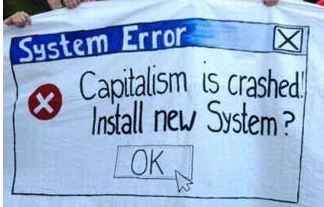
They forget that public sector workers and union members and union members never cheered for policies and procedures that resulted in harm to private sector employees.  Our failing was in not speaking up strongly enough in defense of the rights of all workers.  This is a mistake that we can't afford to repeat.  Now is the time for all workers to forget their minor differences and unite to defend our status and rights.  If we don't we will be left with the "freedom" to move from low paying/low benefit job to others of similar nature.   

Local School Politics…
There are a couple of issues/events that are of significant interest to those of us with a stake in Madison's public schools (that would be everyone in the community).  The first are the upcoming school board races.  We all know that school boards have a significant amount of power under the current system and we need to make sure that we have responsible, pro-public education leaders on the board.


We also can't forget the continuing search for a new superintendent here in the MMSD.  Concerned citizens need to stay informed on both of these issues as they develop. 

Improving Public Education Part 1…
There are so many different aspects of public education that need our attention as we work to improve our schools and to strengthen our connections with our communities and families.  I believe that if we communicate our message clearly and offer reasonable plans we will garner significant support for our public schools.  People tend to believe in their local school, even if they don't have faith in the system as a whole.  This leads to some problems as people cast ballots and support initiatives that actually are detrimental to their local schools.  What our families and communities need are some understandable and logical proposals to rally behind.     

One area that stands out in the Madison Public Schools is our relatively small number of "minority" educators.  There are about 1800 Caucasian teachers in the MMSD (according to the 2012 DPI data) and less than 200 Latino, African-American and Asian teachers combined.  Compare this to the student population which is about 50/50 (with 24% of the students identified as African-American).  Clearly this is an area of concern, but it is also one that has been a focus for improvement for many years. 

Why is it that a district like Madison can't seem to attract and retain a diverse teaching staff?  There are many factors involved and I don't pretend to be an expert on the hiring policies of the district or of the demographics of those applying to work here.  What I do know is that we have a highly experienced and highly educated group of educators and Madison is a very competitive job market for employment in our schools.  I also know that educators and their union have been blamed for some of the disparity in demographics and that as a group we need to provide some response to help change the reality and the perception of our role in the racial disparity in district employees.  
I believe that one significant reason that MMSD has such a stark disparity in educator demographics goes to the issues of college admission and college graduation rates for "minority" students and students of poverty.  The reality of our system of higher education is that students who are from families in poverty rarely succeed in college.  We also know that a significant percentage of African-American families in Madison live in poverty.  In order to teach in the MMSD you need a college degree and a teaching certification.  When you eliminate a significant percentage of a demographic group from achieving a 4 year degree you automatically reduce the number of potential applicants for teaching jobs.
I don't have data on the number of educators in Madison who were educated here in Wisconsin, or in neighboring states, but my personal experience is that many of MMSD's employees are local in origin.  Looking at the data for the UW-System schools it is clear that the demographics are mainly white, middle (or higher) class.  Once again this limits the potential teachers who are outside the majority demographic. 
Unfortunately, conservative policies and educational objectives seek to maintain this disparity in educational outcomes.  While they use buzzwords like "college and career ready" the reality is that their reforms don't have a good track record for advancing the opportunities of students outside the white, middle-upper class demographic.    


To be honest, I don't see any quick fixes or ways to change the current system in a way that will have a significant impact in the near future.  I also fear that, as "reforms" are implemented we will see more inequality in our educational outcomes.  This means that, without some other types of action, districts like MMSD will continue to struggle to attract and retain a diverse workforce.

Unions and their members need to recognize the value of a diverse workforce and work to expand their efforts to attract members from a wide range of backgrounds and groups.  We need to advocate for changes to the ways that educators are licensed while still maintaining the standards and quality that make MMSD's educators among the best.  Looking for alternative paths to licensing and "Grow Your Own" programs will help increase diversity and greatly benefit our students, our union and our district.

I'm no expert in this aspect of educational policy, but I do have significant practical experience with student teachers and the programs they are in at local colleges and universities.  I see a great need for more experiences in classrooms along with the coursework that students engage in.  In fact I believe that students would benefit from more classroom experience and less coursework.  I wonder if we could change the way we educate educators and move from the traditional 4 year college model to one that more resembles an apprenticeship.  By doing this I wonder if we would attract a more diverse group of prospective educators. 

Every year I have students tell me that they would like to become teachers, but I know that it will be challenging for them to gain entrance into a 4 year college, as well as extremely difficult for them to afford the costs associated with getting a degree.  It seems a shame that we lose prospective educators, not because they don't want to teach, but because they can't navigate the process to gain access to employment in education.  Unions could gain support from the community as well as strengthen their membership if they would support changes in the process of gaining licensure.     

Sunday, February 5, 2012

Issue #46 February 5, 2012- History, Elections, Recalls, School Reform and More


What This Is…
Issue #46- February 5, 2012
In this issue: Historical Perspective, Elections, School Reform and More
The More Things Change…
We are living in historical times.  There is no doubt in my mind that what is happening now in Wisconsin and across the nation (and world) is one of those time periods that will have a significant impact on the future of our country.  This is a potential turning point in history.  We have seen a slow erosion of citizen's rights in the political, economic and social spheres.  During the past year people around the world have begun to visibly fight back and work to reclaim what they value. 

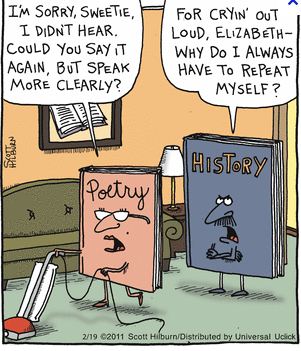
It is a time filled with contrasting emotions like fear and hope.  A time when we see the dangers and work to avoid them, but are uncertain about our potential successes.  During times of strife we frequently turn to past experiences for guidance and for perspective.  In other words, history becomes more alive for us.  History leaves the textbook and takes to the streets and we see the power that common human experiences can have on our society.   

Most of us have heard a version of George Santayana's quote, "Those who cannot remember the past are condemned to repeat it."  It is an idea that is used to defend the value of learning about historical events.  It is also cited by individuals trying to justify their positions on social, economic and political issues.  This idea has become widely accepted and if frequently used as a warning that we are heading toward disaster if we follow a particular policy or other course of action.

The idea that we can learn from the past is a valuable concept that is frequently misused.  Historical events happen in a context that can't be replicated exactly in current times.  Historical events can only be used as a guide and can't be followed blindly.  The belief that by looking to the past we will find the blueprints for our future is one that, when used inappropriately, is very dangerous.   

History is not a tool that can be used blindly.  The fact that all of our recollections of past events are shaped by our personal bias and experience makes one person's "fact" another's "misinterpretation of actual events".  This is not to say that it is impossible to get a reasonably accurate view of a specific historical event.  It is the interpretation of these events that is problematic.   

We’ve seen our political leaders make glaring mistakes when quoting historical "facts".  While on one hand these errors are humorous and provide fodder for attacking candidates we dislike, at the same time the implications of the mistakes are frightening.  When ignorance is used to formulate policy we find ourselves in a precarious situation.  A situation that leads us further from reasoned judgment and more towards uninformed ideology. 

So, is it even useful at all to look to the past when contemplating the future.  I strongly believe that we must know where we came from in order to move forward in positive directions.  We all rely on past experience to complete daily activities.  We can recognize mistakes and learn from them.  However, we only can learn from the past if we are able to view it with an open mind.  It is vital that we don't turn our history into a rigid, unchanging evolution that puts us at the pinnacle of an inevitable chain of events.  It is also important that we don't view our history as one of perpetual gloom where we live in fear of returning to a past that was negative in all aspects. 

History is made up of events and people who lived their lives and made decisions based on their existing situations.  In any history we focus on the famous and historically important figures, for example accounts of the American Revolution will talk about George Washington and his army.  We can't ignore the fact that without "his army" George Washington would not have achieved what he did.  At the same time "his army" wouldn't have achieved as much without Washington.  When we read any history we can't forget the relationship between the big historical events and the common everyday experiences of people that underlie them. 

We are those common people.  It is our actions during this time that will inspire our leaders and create the future that will follow. 


Election Integrity…
At the heart of any democratic society lies the ability of the people of that society to express their opinion.  There are many ways for Americans to have an impact on our political system.  The most obvious and arguably the most important is the right to vote.  This is the way in which the majority of us will express our voice in the political process.  Therefore it is of significant concern when the process becomes tainted or rights are restricted in any way. 

Here in Wisconsin our electoral system is facing major challenges.  These challenges are taking different forms, but the impact is being felt as citizens lose faith in the system, feel excluded from the political process and see our government as a flawed and corrupt entity.  It is important to the future of democracy that we fight against the forces that seek to control the process and return the power to the people it belongs to. 

Challenges to our system of democracy exist in many forms.  The huge influence of big money donors is one challenge that threatens to destroy democracy as we know it.  By ruling that money is speech and can't be restricted, the Supreme Court opened the door to widespread spending and allowed a small number of wealthy individuals huge amounts of power.  This effect is being felt here in Wisconsin as Governor Walker rakes in the campaign donations.  The spending in the recalls over the summer set records and those records will be shattered in the elections of 2012.     


Of course the money spent in Wisconsin is tiny compared to money spent on a national level. 


Clearly there is a strong sentiment that changes need to be made in the way we finance our elections.  It is our job as citizens to support measures that will clean up our campaign finance regulation by using our vote and making our voice heard.  If we don't vote in the upcoming elections then those who are in power will continue to strengthen their stranglehold on the electoral process.


Of course there have been significant efforts made to restrict our right to participate in the voting process.  Much has been said about the new voter ID law here in Wisconsin.  Our defense is to make sure that we help our fellow citizens get registered to vote and make sure that all Wisconsinites have the materials and information necessary to vote in the upcoming elections.  Get deputized to register voters, keep friends, family and neighbors informed and make sure you are properly registered as well.  With the spring elections being held over Spring Break it is important that absentee ballots are properly completed by those of us travelling out of the area. 

While legislation and financial influence are incredibly powerful, there is also a pattern of intimidation being utilized to try and prevent citizen participation in the political process here.  During the signature gathering phase of the recall effort we saw numerous events where volunteers were harassed and threatened.  There were also efforts to tamper with the process and invalidate petitions or otherwise undermine the legal efforts to express political opinions.  Now that the petitions are filed the efforts to bully progressives haven't stopped.         


It is troubling to see the way that our democratic system has been circumvented by the current GOP actions.  In the past year the conservatives in Wisconsin have used their control of the 3 branches of government to force their agenda through without due process.  At the same time they are calling for us to slow down the recall process and not rush ahead with the elections that the people have called for.


Along with the bullying and harassment comes the efforts to discredit the recall process by offering up examples of fraudulent signatures and spreading stories of outlandish comments made by signers and gatherers of petitions.  There is nothing wrong with verifying the signatures and I encourage all citizens from all parties to be involved.  The issue is that by drawing attention to the inevitable questionable petitions we can't ignore the much greater number of valid signings.  As the GOP trumpets the relatively few signatures that are invalid they seek to taint the entire process and thereby render the recall avenue for citizen participation less valuable.   


Finally, there are the elections themselves.  The United States has a long history of electoral difficulties.  In some cases it is the eligibility and competence of the electorate, but more commonly the problems lie in the tallying of the votes.  As we move towards a digital age in voting there are significant concerns about the validity and accuracy of the actual recording of votes. 


What's a citizen of ordinary means to do about all of this?  Quite simple really, stay informed, organized and active.  As long as our system of government remains as it is we have the ability to impact our political processes.  It is when citizens disengage from the process and turn their attention elsewhere that we lose our rights and our control of our government.  We can't let that happen. 

Recall News…
With significantly more signatures turned in than are required to recall all the GOP candidates targeted in this round of recalls it seems a foregone conclusion that there will be elections in the not so distant future.  In fact it seems like a waste of valuable time and money (something Republicans say they are against doing) not to simply proceed with the election process once enough signatures are verified on recall petitions. 


The main reasons the GOP has for delaying the process seem to center on their efforts to slow down the momentum built by recall activists and to undermine public confidence in the electoral process.  We must stand strong and continue to spread the message that the recalls are merited and the recall efforts have been honest and aboveboard. 


Progressives can use this extra time to build support for their candidates and to spread our message to voters.  The stalling tactics used by the GOP can be to our advantage as we work to select the best candidates and refine our political organizing efforts.


What we can't do is focus too much on the polls and projections that will inevitably be put forward.  In the end the only poll that really matters is the one on election day and we must build towards that.  Polls can be helpful, but shouldn't be relied upon too heavily.  This is especially true for on-line surveys and other less formal polls, but also holds true for polls sponsored by different "independent" organizations.     


Scandal…
As we move ahead in the recall process we can't forget that there is a legal issue hanging over the Walker administration.  Conservatives want to dismiss this as a "non-issue", but the investigation seems to be building in intensity.  At the very least we have seen that this administration is willing to overlook some significant problems and has made some very questionable choices in terms of selecting staff.  Given the methods that have been used to advance Walker's agenda it is not unreasonable to believe the allegations to be valid.    


School Reform and Educators…
Reform has become a four letter word for me.  It seems like every effort to "reform" something I believe in moves us in a direction I can't support.  This is especially true in the area of public education.  I am fully aware of the fact that our public schools have flaws.  These have been well documented and heavily discussed by many different sources.

The issue I have with most "reformers" is that their goals don't seem to be uniformly in the best interests of the children and families we serve.  In fact the objectives of many who seek to fix the public schools seems to be one of either self interest or are mainly political in nature.  They would throw out the current system and replace it with a system that has not been proven to work.

It is the hidden agenda of many "reformers" that I find most troubling.  They are preying on a public that only hears part of the truth and believes the negative stories that are told are the entire picture of public education.  They use words that say they care about all children, but their policies benefit only a few.  In fact many of the crusaders for fixing our schools are supported by organizations that have more interest in profiting from education reform than in actually fixing anything.  These are some excellent articles that highlight this point. 


What effect has this had on public educators?  The cumulative effect of the attacks on our competence along with the assaults on our rights as workers have been devastating.  We are finding ourselves lacking in support, resources and time, all things that we need to have in abundance as we work to educate the young people of America. 

Public educators find themselves waging battles on multiple fronts.  We have our daily struggles to provide the best possible educational opportunities for our students.  The achievement gaps exist for many reasons and we struggle to find the best ways to reach those children who are not succeeding.  In itself this is enough for a professional to deal with.  It is what we went into teaching to do, educate.  It is a challenging task, but it is also rewarding and fills a vital need for our society. 

At the same time we are working to educate students we are also finding it necessary to engage in political actions to defend our profession.  As collective bargaining rights are removed and pressure is applied to hold us accountable we find it necessary to take action to protect and preserve our rights.  One of the consequences of Governor Walker's union busting legislation is that educators now have to devote significant time to political actions.  We can't rely on collective bargaining to settle potential problems and must devote more time to politics. 

Beyond the political and economic issues that have been created by the GOP's actions we are also seeing the effects of testing and accountability affect our schools.  The amount of testing that is being done is schools is increasing exponentially.  The number of new initiatives designed to increase student achievement on these assessments is also rising.  We are being told what to teach and how to teach on a regular basis.  These changes are implemented quickly and frequently the changes are soon changed again.  Administrators are feeling the pressure applied from above them and pass this on down to the teachers and support staff in each building. 

Educators are faced with a difficult situation.  We are at the mercy of legislation like NCLB and Race to the Top.  Public perception of our performance is closely tied to testing and other public information about schools.  At the same time we know that many of the initiatives imposed on us are not good practices in educating children.  We know the students we work with and are often their best advocates.  Yet we are being told that our experience and expertise is of less value than that of outside "experts".  Many of these so called experts are long removed from the classroom (if they ever were in schools) and are basing their decisions on how they play out politically or on data collected by flawed assessments. 

We are being swept up in a wave of "reform" hysteria.  A hysteria driven by forces with ulterior motives who promote questionable practices.  If educating students was as easy as many "reformers" make it sound then we would not have the issues in education that we have.  Instead of working with educators we are told we are the problem and that we should just do as we are told.  The pressures on public educators are immense and are truly affecting us in negative ways.     


Our struggles are closely tied (yet also independent from) to the current resistance to conservative ideology that is going on through the Occupy Movement, the recall efforts in Wisconsin (and other states), and other opposition actions across the nation.  It is through our collective actions and support of each other that we maintain strength and hope for a better future.  A future where we can provide a quality education with the best possible outcomes for each student. 

I Can't Believe We Still Have To Protest This "Stuff"…
One of my favorite signs from the spring protests expressed the frustration that we seem to be unable to get our nation past some significant prejudices.  Many of the problems that we are told have been "fixed" still exist, just in a more devious form.  The message from conservatives states that every American has an equal chance and as Herman Cain so eloquently put it "Don't blame Wall Street, don't blame the big banks, if you don't have a job and you're not rich, blame yourself! ... It is not a person's fault if they succeeded, it is a person's fault if they failed." 

Yet we can't forget that the playing field in America isn't truly a level one.  The racism and sexism that have existed in our society in the past haven't gone away.  These "isms" continue to have a considerable effect on the opportunities people have and in the level of economic, political and social success they can achieve.

Women's efforts in the workplace have long been devalued. 


The movement to make individuals more accountable for their actions is an example of a potentially positive idea being tainted by the process of implementing "reforms".  In Massachusetts they have implemented a "zero-tolerance" policy and the results have negatively impacted some groups of students.  By disrespecting the professional judgment of educators and eliminating their ability to deal with situations as they see best we create a system that can force students out of school and thereby reduce their potential to be productive and positive members of society.


Teachers aren't perfect.  Our schools reflect the society they exist in.  There is no way to completely separate the problems of society from the schools and the effects are felt in many ways.  I couldn't believe that I was reading this article from 2012.  We have a history in this country of using public education as a weapon against other cultures and must be aware of potential continuations of this.  This is also an example of how private schools can act in ways that public schools can't (and shouldn't).         


As I've been reflecting about the events of the past year I've become more aware of the benefits that I've enjoyed over the course of my life.  Without realizing it I've been a member of a fairly privileged class.  My race, gender, language, etc. have all allowed me to live well in a wealthy country.  The attacks on public workers are ones that people from other groups have experienced for a long time.  As we work to restore the rights of workers in Wisconsin we can't ever forget that there are other groups of people who have suffered discrimination and prejudice.  Our efforts can't stop once we've achieved our goals, instead we should use recent events as a motivation to improve the status of all people in America.

Free Press…
Last week I wrote about the importance of the free press in America and the threats that censorship and corporate ownership pose to its existence.  These threats come from many sources, but seem to me to have their roots in two origins; money and power. 

Free can mean many things, but the original intent of the term "free press" seems to center on the ability of the press to report information without fear of reprisal or censorship.  There is a shared responsibility between all parties to keep the information accurate and to be thoughtful in the process of sharing and receiving  the news of the day. 

However, the word free can also mean "without cost".  Our current media is heavily influenced by the influence of money.  We pay for the information we receive and our media sources are a lucrative business.  This leads to a constant desire to get the latest "scoop" and to corner the market on information.  While this competitive environment is positive in many ways as it drives journalists to seek out sources of information and to report on issues of importance.  The financial competition also creates an atmosphere where getting a story out can sometimes trump getting a story correct.  With the huge number of different sources of news there is a constant barrage of stories and editorializing.  Many times this flood of information leads to intense reactions that go beyond reason. 


Thomas Hobbes said, "The end of knowledge is power…" and it is true that information is a powerful thing to control.  Political leaders and media executives go to great lengths to make sure that they have the ability to disseminate information to the public in a way that benefits them.  We have seen the media manipulate and be manipulated in ways that impact the ability of the people to form reasoned opinions about events and policies.  While this is not a purely Republican trait, the GOP has made a habit of using the media as a form of propaganda in recent years.  The coverage of the Wisconsin protests are one great example of how the reality of a situation was manipulated for political advantage.


The political and financial manipulation of information is a severe threat to our democracy.  Without accurate information we are unable to make decisions in our best interest and are kept ignorant of the facts that influence our lives.  A free press helps keep our nation stable by ensuring the people make informed decisions.  Nations that don't have freedom of the press tend to resolve conflicts in more disruptive and violent ways.  That isn't what we want here in America.

Those who make peaceful revolution impossible will make violent revolution inevitable.
John F. Kennedy, In a speech at the White House, 1962
Follow the Money…
We have been told that the issues in Wisconsin center around our failing state budget.  The idea that we need to do whatever it takes to balance our budget and restore fiscal responsibility is central to Governor Walker's message.  However, it seems clear to me that the reality is quite different.  Money is certainly a significant underlying factor in the agenda advanced by the GOP, but not in the way that they claim.

There are many ways that we've been mislead about the financial goals of the Republicans in Wisconsin.  One is that they are interested in lowering the costs of government and reducing taxes for the common citizen.  Their tax reforms have a negative impact on many Wisconsinites. 


As to the reduction in government costs…


It certainly appears that the GOP's policies are all about improving the status of specific groups and not about improving things for all of us.  Remember who was appointed to a position in Walker's administration?  Jonathan Barry, part owner of Tyrol Basin.  I'm sure there's not any correlation here.


Republicans at a state and national level are not above using policies designed to help others and then speaking out against those policies for political advantage.  The accounts of GOP members benefitting from tax loopholes and financial assistance programs are numerous.  Yet at the same time these politicians speak out against the very programs they use.  Hypocrisy is not exclusive to Republicans, but the tone and tenor of the rhetoric they use magnifies the discrepancy between their words and their actions.


In fact it appears that many of the people elected to positions have little if any intention of actually representing the people.  By undermining the political process and damaging public confidence in the system these "leaders" promote their agenda of privatization and maintaining the power of the wealthy elite.


The actions of the Komen Foundation this week have been well documented.  It is sad that an organization that provides such hope for so many can be used in such political ways.  We should always be aware of where the money comes from when we consider what charitable organizations we support.


The struggle to regain control of our political process continues.


Mining…
The mining issue in northern Wisconsin continues to provide a microcosm of what is wrong with Wisconsin politics.  The efforts to promote mining are supported by people operating in the shadows who aren't accountable to the public.  Opposing views are ignored or repressed.  Alternative ways of improving the economy are downplayed or restricted.  The needs of a few individuals are put ahead of the traditions, opinions and safety of the general public.  This is not what democracy is supposed to look like.