Showing posts with label Standardized Testing. Show all posts

Sunday, November 30, 2014

#190 November 30, 2014- Creating a Vision for Public Education


A Vision for
Public Education. . .
Public schools are supposed to provide opportunity, community and hope for the future.  The concept of public education is one that finds its roots in the ideals that America is supposed to represent.  The idea that, as a society, we are responsible for providing educational opportunities for all students, without exception, is a powerful one.  Public education, done well, has the potential to unify our diverse society and to provide the opportunity for all citizens to achieve their goals, hopes and dreams.

Yet, this potential has gone unrealized in too many places.  This happens, not because the concept of public education is a poor one, not because those in the system are not working hard, and not because those accessing the system don't want to succeed or don't value education.  Instead, it happens because we fail to articulate just exactly what it is that we are trying to achieve and how we can accomplish the lofty goals of our educational system.  Because of this we, as a society, have never fully supported our nation's public schools and instead have used our vast resources and abilities in inefficient and inconsistent ways. 

When we think about our public schools and what we hope that they provide for students and society, we too often find ourselves simply stating broad, even unachievable goals.  Think of the mission statements and visioning statements that our schools use.  In Madison one of our previous ones was "Success for All."  Now we see a movement to make sure that every student is career, college and community ready.  These our great goals for a school district, but the important aspects of these statements don't lie in the words, but in what those words mean. 

Everyone I've ever met wants the same things from their public school.  Whether family member, educator, student, policy maker or community member the basic goals are the same.  We all want safe schools where every student achieves their potential and leaves ready to live a happy, productive life.  While this may seem simple, and even obvious, the issues arise when we begin to define specifically what we mean, and work to incorporate a diverse set of viewpoints into a complex endeavor.  What is success?  What does it mean to be productive?  What tools do we use to educate our students?  How do we provide a safe, positive environment?

We live in an incredibly diverse society, and this means that the answers to these, and any other questions we ask will be as divergent as the society that our public schools serve.  This makes people incredibly uncomfortable.  We like to think that educating our students is as simple as the traditional teaching of the "Three R's" and that any policies around our schools will be able to meet the needs of every person in the system, no matter what their background or role.  Yet, we constantly are reminded that there isn't any way to create a perfect system, and that the efforts to provide public education to all students is every bit as difficult as operating a democratic and socially just society.  Our schools, just like the society they are embedded in, are in a state of constant tension, change and evolution. 

However, because our public schools are as much a bureaucratic institution as they are an engine of change and progress, we see efforts made to "reform" and standardize our schools.  There is a strong movement that exists to create measurable, concrete objectives and to push all of our students through a system designed to meet those goals.  These efforts provide a false sense of stability and purpose in an uncertain and confusing process.  They take some of the realities and constants of education and twist them into a package that is easily sold to the general public.  Along the way, they provide opportunities for economic and political gain for some, and divide our society along different, pre-existing lines.         

Edutopia blogger Mark Phillips examines eight myths that drive education policy, including the value of homework for students and merit pay for teachers, the irrelevance of funding and class size, and the fairness of college admissions.
edutopia.org

If we are to counter this message of standardization and profiteering from our schools, those who support public education must become a voice that offers a different narrative about our schools and education in general.  This is challenging because there isn't the same, single-minded unifying sense of purpose among the many diverse interests that seek to restore a balance to our public education system.  Instead, we have become a collective voice of resistance and opposition, something that hasn't been effective in combating the propaganda of those who seek to privatize and standardize our schools.  Those who oppose education "reform" need to articulate a vision that can be used to build a positive argument for truly reforming our schools in a socially just and sustainable way. 

This vision will be diverse in nature because it must be broad enough to incorporate the many different aspects and needs of all members of our society.  In fact, our vision of what education can, and should be, is not necessarily policy in and of itself, but rather a discussion starter that will create a climate where we can truly support and nurture our students and our public schools.  By moving the dialog away from combative and divisive arguments towards more inclusive discussion we can create an environment where we can create policies and systems that are community based and supported, as well as ones that are truly in the best interests of our students.   

Our visions may be diverse in nature, but they should address some key, universal elements. 

They must clearly identify and define key terms and concepts such as education, achievement, accountability, opportunity and success.  If we fail to do this we will continue to struggle to provide the supports that our students, staff and schools need.  Our efforts will lack focus and will move in too many directions.  We need to positively define what it is that we are doing in our schools.  This will provide us with a base from which to build policies and systems that truly work.   


Author David Price writes: "If schools are coming into direct competition with the learning opportunities available in the informal social space, it has to be said that this is a pressure, which barely registers within the political discourse."
blogs.kqed.org

Public education advocates have shied away from taking …
forwardinstitutewi.org

By not defining what we are trying to accomplish we will continue to see our efforts to improve and enhance our public schools derailed by misconceptions, mis-perceptions and outright distortions and untruths.  The public supports public schools, but they also support accountability and concrete results while not always knowing what they mean by these ideals.  As long as we define success by test scores we will see the emphasis on standards and assessments retain its power.  

Two new surveys try to quantify the number of standardized tests students take in school — an estimated 113 by graduation.
npr.org

The visioning must include all students and families and recognize positive intentions not negative assumptions.  Currently our dialog is driven by a small number of people who have specific interests.  We must make sure that all voices are heard in the process and seek out those who have not typically taken part in the dialog around our schools.  This would build widespread support for real reform efforts and change the dialog around our schools.  Our current climate is one where it is too easy to divide and conquer those who need our public schools the most.  We can't afford to let efforts to really reform schools become one where only a small number of voices, and ones that are already loud enough, are heard.      

In the latest dispute over standardized testing, hundreds of high-school seniors in high-performing, wealthy districts are skipping science and social stu
denverpost.com

MADISON (WKOW) -- The Wisconsin Department of Public Instruction released results from the final...
wrex.com|By Greg Neumann

We also know that our schools are part of a larger society where inequality is the norm that must be changed.  Policies like the MMSD Behavior Education Plan are steps in the right direction.  However, without the proper supports we will continue to see inequities exist.  Each suspension has a context that must be considered as we work to change our systems.  By discussing and defining key aspects of our schools with all stakeholders we can begin to move beyond the data and rhetoric and truly support the needs of all who learn and work in our public schools. 

The number of out-of-school suspensions was 773 in the first quarter of the school year, compared to 373 a year ago.
host.madison.com|By Pat Schneider


We have to make sure that educators who work directly with students are at the center of the discussions.  Currently we see a disturbing reality where the people making decisions about our schools don't work in the classrooms that their policies impact.  This has frustrated educators and created dissension and division where cooperation and unity is needed.    

A recent Gallup poll indicates that students' emotional engagement and well-being at school is powerfully tied to academic achievement.
blogs.kqed.org

An open letter to parents: 'If keeping our jobs means harming children and squelching them during a prime developmental span, then we want no part. '
washingtonpost.com


Educators need to seize the moment and expand the efforts of their unions and professional organizations to include issues of social justice as well as more traditional contractual ones. 


The value of public education must be made clear.  By allowing education to be defined in financial terms we have allowed it to become a commodity that can be measured.  Education becomes valuable only for economic reasons and loses its power to transform and enlighten. 

The One Question Every Parent Should Quit Asking
In an effort to prepare our kids for the dog-eat-dog, competitive world before them, we fill their days with activity. Schedule them from dawn to dusk to maximize their potential. So they can learn. And grow. But I fear that in our quest to help them,...
www.huffingtonpost.com

The public accountability and the fact that public schools are responsible for all students, not just those who are admitted based on school defined standards, is an important part of the discussion.  Public schools are inclusive in ways that privatized schools never will be.   


We can't forget that we have the power to make change happen, and we must use this power.  Families, students and educators working together have the ability to articulate, create and implement a vision that works for the benefit of all.  We can't accept the status quo as the only, or best way of doing things when we know that excessive assessment, inadequate funding and overly standardized curriculum are not in the best interest of anyone.  It is up to us to utilize our power.  To not do so is irresponsible and damaging to our society as a whole. 

I've said it many times before, our public schools are a mirror of our society.  They provide an insight into who and what we value.  They don't exist in a vacuum and can't unilaterally impact their students.  Reforming or transforming our public schools involves making positive change happen on a societal scale.  The time to make this happen is now.      

Why haven't education reform efforts amounted to much? Because they start with the wrong problem, says John Abbott, director of the 21st Century Learning...
blogs.kqed.org

The Good, The Bad and
The Ugly. . .

The Good . . . High turnout, huge victory for Madison educators, and educators around Wisconsin.  The struggle continues, but keeping our unions gives us more power in the fight. 

Educational assistants, substitute teachers, support staff and security staff all also strongly backed recertification of their bargaining units.
host.madison.com|By Pat Schneider


Educators remain committed to the role of the union
The results of the November 2014 recertification elections are in and underscore the fact that educators remain committed to the role of the union. 97% of the teacher units seeking recertification...
weac.org

The Bad . . . For someone who ran on the premise that he'd fixed our budget issues this seems a "tad" troubling.  Running and winning  on issues of integrity and fiscal responsibility, and then following up with a "whoops we aren't as well off as we thought" press release shows just where this administration stands.  Those who were duped by the ads and the rhetoric (or who simply didn't vote) have given Wisconsin another 4 years of this. 


Gov. Scott Walker's administration says Wisconsin faces a $2.2 billion budget shortfall by mid-2017, a problem that will have to be tackled by the Republican-controlled Legislature next year as...
wbay.com

The Ugly . . . Satire or not, this type of comment is easily found on real message boards, in comments online and in political commentary around the nation. 

“Are we seriously going to allow our children and grandchildren to be in a position where they’re expected to vote for a Hispanic president?!”
newslo.com


Sunday, September 28, 2014

#181 September 28, 2014- Systematic or Enlightening


Education Defined. . .
Public education in the United States has served many functions, better or worse, over the years.  Just as our founding documents and national rhetoric show a disconnect between the vision of a nation founded on the principles of "Liberty and Justice for all" and the reality of what has transpired over time; so too, our systems of public education have too often left the promise of equality and opportunity for all unfilled.  The vision of education as the cornerstone of a democratic society has been co-opted by politicians seeking a tool to access power, and by those who would use education as a weapon of socialization or domination.  These efforts have left students, families, communities and educators to grapple with an inequitable and inefficient system that serves different groups in different ways and produces unequal results.   

There have been efforts made to address the issues around public schooling in America, but they are too often controlled by those outside of the schools that are being reformed.  It is readily apparent that many of these so called "reforms" find their motivations not in sound educational practice, or in an effort to make the system better for all students.  Instead, these "reform" efforts are rooted in a desire to achieve a specific political, social or economic outcome.  Educators on the front lines in our schools are put in the unenviable position of having to choose between risking their jobs or teaching in ways that they feel are inherently flawed and unjust.     

An education system that does not honor the educator as one of the most powerful supports in a child's life fails to realize the value of local leaders.
azcentral.com

Despite claims to the contrary, our public education system has never been uniformly supported financially or pedagogically.  Now, with the waves of  economic and social "reform" sweeping our nation the problems are magnified. 

The teachers have been lying to us. For years. They've been covering it up. Papering over underfunding and mismanaged fiscal priorities with brightly coloured posters and sparkly stickers. Concealing an impoverished system by...
huffingtonpost.ca

Chicago teacher reports on the effects of privatization of custodial services at her school, and it is a dirty business.
livingindialogue.com

Venture capitalists and for-profit firms are salivating over the exploding $788.7 billion market in K-12 education. What does this mean for public school...
thenation.com

There are many ways that the injustices and inequities play out in our current system of public education.  The Achievement Gaps that our students face are well documented.  The buildings that serve different communities are visibly unequal.  We can also see how our students are tracked and moved in directions that result in unequal outcomes. 


None of this is particularly new or even startling to those who have been paying attention to our educational systems in the present, or the past.  The gaps and inequities have been in place for a long time, and they mirror the gaps and inequities that we see in our broader society.  What is especially troubling about the current state of affairs is the concerted effort to make these unfair imbalances as permanent as possible through policy and legislation.  Whether by directly mandating certain policies (NCLB and RttT), by influencing curriculum and assessment (Common Core) or by controlling educators through intimidation and silencing their voices (Act 10) the current crop of education "reformers" are seeking to institutionalize unjust educational practices.  

A generation ago, our nation enacted the No Child Left Behind law (NCLB) which measured the quality of our schools by the state standardized reading and math test scores of students. Schools that did not make the required progress were...
nea.org

That this follows so closely on the heels of a period of hope in American society; a time when our schools were becoming more integrated and Achievement Gaps were closing, is deeply troubling.  It is also problematic that those who are falsely "reforming" our public schools are doing so in the name of improving outcomes for students and supposedly creating a better system.  They are based on a flawed idea that competition and accountability will create a system that improves educational outcomes. 

The efforts to make a system that will address every need of every student in a uniform way ignores the simple reality that all individuals are exactly that, individuals.  No two learners will be exactly alike and any system of education must take that into account.  Our current "reforms" also attempt to take the multiple facets of education and select a few to apply.  Education becomes a thing that we can identify and quantify (as in getting a good education or a poor one) and loses its status as an active process that is difficult to place a number or value on.

Our current system has become so data driven that we have, in the process of defining a quality education, ceased to deliver what we seek to measure.  We test, we assess, we record and collect data, and in the end we fail to provide quality educational opportunities to our students.  Instead of allowing our students to explore their world and playfully interact with their learning environments we post "learning objectives" and measure their progress as though they are patients in an intensive care unit.  We put our students on an educational treadmill and turn them into piece work employees or assembly line workers who are rewarded for parts of a process, but never get to see the whole product they are working towards.        

Many years ago, I first heard the term "semantic infiltration." It was used to refer to the way that...
dianeravitch.net

A key component in the efforts to "reform" education is the use of standardized assessments to measure progress and to hold our educators and schools accountable.  While assessment is a vital part of any classroom it has become a more dominant aspect of the process than it should be.  As a 4th grade educator I will spend close to 30 hours administering standardized assessments to my students this year.  That is about as many hours of art instruction as they will receive, or as many hours of music as they are allotted.  I hear educators from primary grades talking about how they haven't yet gotten into their curriculum because they are still administering assessments.  Our students who are most at risk are not being taught, all so that we can determine that they need to receive instruction in the areas that our assessments identify as needs.  Yet, any educator in my school building can already tell who is in need of more intensive support, even without specific data about a student.

Over-testing has become a central aspect in the struggle around improving educational outcomes for our students.  Even Progressive educators find themselves falling into the assessment trap when we compare our test scores to those of privatized schools.  We also allow assessment to become a dividing force when we push for students in voucher schools to be tested in the same way public school students are.  In reality, all educators should be banding together to inform our communities and unite in an effort to reduce the amount of testing that all students experience.    

I Refuse to Administer the PARCC: A Letter to the Citizens of Colorado by pegwpen · September 21, 2014 Citizens of Colorado, I address this letter to you,...
corave.k12newsnetwork.com

We also need to support our students and families when they rise up in protest of false "reforms."  Our students should have a voice in how they are educated and what the environment they learn in is like.  We need to allow our students to grow and develop naturally as people and as learners.  Instead we continually prepare them for the next level, or the "real world."  As one of my students said a couple of years ago, "Mr. Waity, why do we always have to get ready for 6th grade?  Why can't we just be 5th graders and do kid stuff?"


Denver area students walk out of school in protest
salon.com

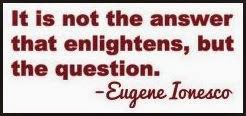
One dictionary defines education as either. . .

1. the process of receiving or giving systematic instruction, especially at a school or university.
or. . .
2. an enlightening experience.

The question remains, to we want students in our schools systematically instructed, or enlightened?  It is up to us to decide.

The Good, The Bad and
The Ugly. . .

The Good . . . Despite all the efforts to derail the ACA there is some relatively good news on the health insurance front. 

Rate filings submitted to the Wisconsin Office of the Commissioner of Insurance (OCI) show the cost of health insurance plans to be offered to Wisconsin residents on the Affordable Care Act's...
wkow.com|By Greg Neumann

We all need to make sure that everyone who is eligible has their vote counted in every election.
 
Got ID, Wisconsin?
An interactive tool to ensure your vote counts. Brought to you by United Wisconsin.
unitedwivote.com


Wisconsin DMV Official Government Site - Obtaining an ID card
Requirements for obtaining a Wisconsin identification card.
dot.wisconsin.gov

While there is always the important caveat that the Madison economy isn't thriving for all groups, we also know that the Madison way of doing things can work, and can be a positive vision for our state.  
 
Madison economy thriving in spite of the WMC/Walker Way
Discussions from a graduating Master's student on items including life in the Upper Midwest, the dismal science, and brilliant beverages.
jakehasablog.blogspot.com|By Jake formerly of the LP

National defense is important, and our security needs to be protected.  However, we can't forget that a huge part of national security is having a stable, well fed, engaged population living in a socially just society.  That's something that unions can help create.

Unions: The Real Homeland Security
Americans are obsessed with national security. Over half of the national budget is spent on defense. The Department of Homeland Security has brought us the biggest bureaucracy in the history of human kind. But for most of us real security...
middlewisconsin.org

The Bad . . . If this election continues to be portrayed as a choice between the lesser of two evils then we will struggle to get the turnout that we need.  We may have reservations about Mary Burke, and we may want her to take a stronger stance for public education and labor, however, we know that we will be ignored (at best) and attacked by her opponent.  We need to put our support behind a candidate who will do more than cater to a small group of special interests. 

Democratic nominee Mary Burke has stayed mostly quiet on union issues, despite its potency among organizers
america.aljazeera.com

The Ugly . . . All the information and all the effort to get out the vote is being made more difficult by the timing of the decision and the logistics of implementing the law.  This is a horrible injustice and it's happening right now, in our state. 

Agencies: No money to implement voter ID
fdlreporter.com
 
Dane County Clerk Scott McDonell: Implementing voter ID this close to the election 'a mess' : Ct
In a television interview, he says some people will struggle to be able to vote in the Nov. 4 election.
host.madison.com|By Lee Enterprises

Sunday, March 16, 2014

#156 March 16, 2014- Educational Identity and Political News


Who Are We. . .
Defining who we are is an important part all of us as humans.  As social creatures we need to establish our identities and work hard to get others to see us in positive ways.  This is true for individuals, and it is also true for larger groups of people as well.  We spend a lot of time and energy working to create perceptions of who we are and what we stand for.  Some of these perceptions are accurate and others are more "PR" that we create, or perceptions, accurate or not, that others create for us.  As Machiavelli stated, “Everyone sees what you appear to be, few experience what you really are.”

For most individuals, how we are perceived by others is a matter of personal interest, but is of little importance outside our immediate circle of friends, colleagues and associates.  However, for those who have greater societal influence, or for groups of people the impacts of public perception are of more significance.  This is why advertising and public relations departments become so important in creating an image of major political, social and economic figures and groups.  There is a need to influence public opinion in order to sell a product, whether that product is an item, an idea or a specific individual.  This is especially true in a society like America's where choice and freedom are held in such high esteem.

There is a constant balancing act that goes on in our public debates here between convincing people and coercing people.  Our idealism tells us that we can use facts and sound arguments to convince others that our viewpoints and ideas are correct.  If our argument is sound, or our product is good then others will buy into our way of thinking, or literally buy what we are selling.  We see efforts to convince others in many places in our society.

Yet, there is another side to public perception and gaining the support of others in our efforts to promote ideas and things that we value.  Coercion is always a part of the human experience.  Once again turning to Machiavelli, “it is much safer to be feared than loved because ...love is preserved by the link of obligation which, owing to the baseness of men, is broken at every opportunity for their advantage; but fear preserves you by a dread of punishment which never fails.”  In other words, since people can't be trusted we need to have some type of mechanism in place to make others do as we want, and fear or punishment is the most effective way to insure cooperation and compliance. 

The more important the "product" is to us, the more likely it is that we will turn to coercion over cooperation.  This is very logical, after all, in matters that are considered important we should do everything possible to make sure that everyone does what is necessary for the survival and prosperity of our society as a whole.  Even in a "free" society like America's we use a number of different mechanisms to insure the compliance of members of our society.  We use physical force and maintain our police and military forces.  We use economic force.  We also use social forces to control the thinking and actions of people in our society.

This may all sound a little heavy handed and bleak.  Yet, it is part of human nature and doesn't have to become Machiavellian in nature.  Human interactions are complex and we rely on a number of different mechanisms to get the things that we want and to promote our ways of thinking.  The language of our founding documents is filled with these conflicts.  On one hand we have the hope and optimism expressed in the power of the people and their efforts to create a just and free society, and on the other hand we see the constant fear of the misuse of power by people. 

In the end, what really matters is our view of humanity and our ability to tolerate our imperfections and our trust in our ability to resolve the problems that we face.  Either we, as a collective whole are able to work together to create a better society, or we must rely on outside forces or strong individuals to control our less positive traits.  The questions of where the power to make decisions lies and who should be responsible for the directions that our society takes are not simple ones, nor are they ones that should be taken lightly.  They also are not as ideologically simple as we would like them to be.   

These are conflicts that have been ongoing throughout human history and that are often masked by other factors.  It is here that our ability to present ourselves in a variety of different ways comes into play.  Honesty isn't something that we have come to expect in our politicians or other prominent public figures.  In recent years we have been conditioned to mistrust those in power, while at the same time we find ourselves turning to new leaders (who frequently end up failing us in the end).  There is a significant amount of irony in hearing candidates tell us that we should trust them and not their opponent, when in reality they are closer in thoughts and actions to each other than they are to the people they are supposed to represent.

It all comes down to the ability of the people to discern what is reality and what is a façade, manufactured to generate support for an ideology or candidate.  However, we live in a complex world, one where fact and fiction often seem interchangeable.  We need an educated, constructively suspicious population that participates in all processes involved in decision making and governing our society.  Education is the key to this, and is vital to the survival of our ideals and our democratic institutions.  No wonder that public education has become a central battleground in the conflict for control of our society. 

Our public education system is a reflection of our society and where we are headed.  How we treat our children and how we choose to educate them reflects on our core values.  It is also a place where we see public perception manipulated and an effort made to control the debate in a variety of ways.  If this premise is true, than what do our stances on public education tell us about the direction our society is moving in?                  

As individuals and as a society, we spend our money on the things that value and express our ideals through our use of financial resources.  In other words, we put our money where our mouth is.  The question becomes, who owns and controls our rights to an education?  Is it the citizens, students and their families, educators, or some other interest?  

If one employee leaves Cuba City High School for a higher-paying position elsewhere in Wisconsin, it can leave the school short of instructors in two or more subjects.
Green Bay Press-Gazette

Like so many people, when I read Mercedes Schneider's posts on Bill Gates and the Common Core I struggled with a jumble of emotions. Surprise. Disgust. Awe. Anger. I'm a visual learner which meant ...
honestpracticum.com

What we choose to spend our financial resources on reflects many things, but we should be making decisions about technology and curriculum purchases based on best practices for our students.

s a pediatric occupational therapist, I'm calling on parents, teachers and governments to ban the use of all handheld devices for children under the...
The Huffington Post|By Cris Rowan

The Waldorf School’s computer-free environment has become a draw for parents at high-tech companies like Google.


How we measure our school systems' successes or struggles also helps define our views on education.  We measure what we value and analyze the results using ideological filters.  We continue to measure educational achievement in ways that are misleading at best and harmful at worst. 

The Senate and Assembly remain at odds over how to reform the state's new school report card.
madison.com|By Lee Enterprises

The federal footprint on standardized testing would shrink under a bill set to be introduced by Reps. Chris Gibson, R-N.Y, and Kyrsten Sinema, D-Ariz., that has major backing from the largest...
blogs.edweek.org

The president of Bard College says recent changes to the SAT are motivated by the competition that College Board has experienced with its arch rival, the ACT, rather than any serious soul searching
TIME


There was a lot of "crazy" for comedian Jon Stewart to review after last weekend's Conservative Political Action Conference, or as he calls it,...
Talking Points Memo


How we treat those who work in our schools also reflects the value that we place on education in general.  

Between San Francisco's hot real estate market and its dwindling teacher pay, not one home or apartment is listed on the market there at a price a...
DailyFinance

A couple of comments from this article. 
"So what ? Who gives a S_ _T about them or any other public sector worker."
"Teachers work 9.5 months a year (180 days to be exact), so yes, it might be difficult to make 12 months of mortgage payments on 9.5 months of salary. The math makes perfect sense to me .I have to work 250 days a year. (5 days x 50 weeks). So, they can either get a career working 12 months a year or get a summer/second job. I appreciate what they are doing for our children, but don't complain about your salary being 75% of the rest of us if you only work 75% as much. I'd love to have your year round health benefit package also."

Whether we see attacks on individual educators, or on the unions that serve and protect educators the message is the same, education is a  "lesser" profession.

At CPAC panel, RNC Chair Priebus touts "total and complete unity" between GOP, Tea Party, and Glenn Beck acolytes
Salon

I didn't think that I would have to update my "Allegations Against Mr. Portelos" list again, but unfortunately I did. Those who have been working tirelessly to end my career hit a new low. A new...
wp.me

At a San Diego school board meeting on Tuesday, dramatic testimony from teachers and parents uncovered serious questions about the way their...
blogs.edweek.org

At one time our public schools were valued and respected, but now. . .

Well, this is not something you hear every day. Ohio state Rep. Andrew Brenner (R-Powell) has raised some eyebrows with a blog post titled "Public...
The Huffington Post|By Rebecca Klein

The problem is that we are allowing our society to be defined by those who would seek to profit as individuals from our collective efforts.  Public education is a bulwark that stands in the way of oligarchy and other non-democratic forms of government.  We need to change the discussion and move forward, building on the strengths of our existing system and utilizing the talents and skills of the professionals who work in our schools.  

The Good, The Bad and
The Ugly. . .

The Good . . . It's still a long way to November, but not too early to hope.

A great piece of news for Mary Burke supporters and a troubling wake-up call for Gov. Scott Walker's campaign.
madison.com|By Lee Enterprises

If we can weather this current storm of Conservatism, maybe the future will look a little brighter.

Get off America's lawn, you punks.
New York Magazine|By Jonathan Chait


The outpouring of love and support from the community was tremendous, and events like this would further honor someone who worked hard to bring different parts of our community together.

Michael Johnson and Ed Hughes are planning a potluck dinner to strengthen community and honor the former Memorial High School principal who...
madison.com|By Lee Enterprises

The Bad . . . It's still long way to November, and the quality and "integrity" of the campaign will probably not rise to a higher level.

The Republican Governors Association was running a TV ad linking Democratic gubernatorial candidate Mary Burke to the state’s economic woes under former Gov. Jim Doyle.
Milwaukee Journal Sentinel

We have to stay vigilant and remember that our opposition is willing, and able to do just about anything to maintain political power here in Wisconsin, and around the U.S.

Backed by the billionaire Koch brothers, Americans for Prosperity has campaigned against taxes and spending in Coralville, Iowa, but some voters are skeptical of its motives.
The New York Times|By JOHN ELIGON

In-person absentee voting would no longer be allowed past 7 p.m. or on weekends in Wisconsin under a bill the Republican-controlled state Senate moved closer to passing Tuesday, despite objections from those who say it's...
Green Bay Press-Gazette


The problem with elections in Wisconsin — as it is across the nation — is that not enough people vote.
postcrescent.com

The Ugly . . . No explanation needed.

George Zimmerman was shaking hands, smiling and signing autographs at a central Florida gun show Saturday.
WESH 2 News|By WESH