Sunday, March 24, 2013

Issue #106 March 24, 2013- April Elections, Resisting School Reform


April 2nd Elections Looming…
We are only about a week away from the April 2nd elections.  There are a number of important races that will be decided and everyone's participation is needed.  We know that spring elections are usually low turnout, so every vote will be even more important.  The ironic thing is that, while more people cast ballots in presidential elections, it is these local races that tend to have a greater impact on the individuals in specific communities.  So get informed, get involved and get to the polls (either on April 2nd, or vote early).


There are two major state wide races.  Both have significance in the continuing fight over the future of public education in Wisconsin.  In the race for State Superintendent of Public Instruction Tony Evers faces Don Pridemore.  Evers is the best choice in this contest.  He has experience, and is an advocate for public schools.  Pridemore is inexperienced and appears to be a mouthpiece for the "reform" and voucher movement.  He might be a good selection to lobby for privatization, but not to lead Wisconsin's Department of PUBLIC Instruction. 


The second state race is for a seat on the Supreme Court of Wisconsin.  This race features Ed Fallone against Pat Roggensack.  Once again there is a clear difference between the two candidates with Roggensack firmly in the conservative camp.  She is getting significant support from conservative organizations and represents the movement in Wisconsin to consolidate power in the hands of the GOP majority.

On the local level, there are three seats up for election on the Madison School Board. 

Seat #3- Dean Loumas vs. Wayne Strong
Seat #4 James Howard vs. Greg Packnett
Seat #5 TJ Mertz vs. the now out of the race Sarah Manski

While there are many issues facing the MMSD and the school board will be at the center of all the decisions made, the most important issue of all is the commitment of any elected board member to defending public education.  We can debate curriculum, we can disagree about testing and data driven reforms, and we can have conflicting visions of how best to address the many challenges that face our schools, however we can't afford to elect anyone who isn't fully committed to public education.  Someone who supports vouchers or any type of privatization should not be a school board member, making decisions about our public schools.  Voters must pay close attention to the comments, backgrounds and connections that candidates have and choose wisely in these races. 


The race for Dane County Circuit Court features Rhonda Lanford versus Rebecca St. John.  Lanford is a strong candidate who doesn't have the unsettling baggage that St. John brings with her.  St. John has connections with conservatives who are tied to the Walker administration.  It is important that we have qualified and impartial judges to provide fair, legally supported and ethical judgments.  Rhonda Lanford provides the best choice for Circuit Court Judge in Dane County.  


Organize for the Future…
It is safe to say that there has never been a time in human history when people have had more access to information so quickly and in such volume.  Most of us are never more than a second or two away from resources that provide us with up to the minute news about virtually any topic imaginable.  This access to information allows us to inform ourselves and others about important issues and to share opinions quickly, reaching more people than anyone could imagine just a few years ago.   

However, information is a double-edged sword in many ways.  As an educator I find it difficult to argue against anyone becoming more informed and accessing as much information as possible.  Yet, at the same time this vast amount of information threatens to overwhelm us and often creates a sense of hopelessness and frustration.  We are inundated with images and stories that, too often, demonstrate the negative aspects of human nature.  Leaving us with the idea that the world is a hostile place and one that we can have little effect on.  


You can feel this hopelessness in many ways as people withdraw into "safer" corners of the world and seek to shut others out.  Instead of building community, we see some arming themselves and increasing the barriers between people.  Instead of supporting public institutions we see a movement to privatize services and to exclude others so that a small number can feel secure.  We see organizations and institutions pulling back and becoming conservative in order to preserve resources and to keep functioning, even when these cuts are counterproductive and even harmful to those who rely on them.      

With all of the access to information and the ability to get a sense of public opinion quickly there is still a sense of disenfranchisement felt by a large portion of the people.  We also see an effort being made to manipulate public opinion and to generate fear through the way specific demographic groups and certain organizations are portrayed.  The protests in Wisconsin were called "mobs", the Chicago Teachers Union earned the label of "thugs" (one proudly carried by Wisconsin educators as well).  Extensive damage was done to the state capital in Madison and the normal operations of a city were disrupted by hordes of educators in Chicago.  The list of negative imagery used to describe those fighting for progressive values is virtually limitless. 

We also see the challenge of sorting through the vast amount of information to find accurate information.  Public opinion is manipulated through words, but also through the use of data and "facts".  These "facts" vary based on the source and the way that they are used.  We have watched the job numbers in Wisconsin fluctuate more than anyone could ever have thought possible, with multiple sources quoted and the data altered beyond recognition.  The numbers and "facts" become a part of the argument and are used even when later proven incorrect.  Apparently, despite claims to the contrary, Wisconsin isn't really "Open for Business".    


As the struggle continues it becomes more and more difficult for individuals to speak out against the wrongs that are being done in the name of "balancing the budget" and "preserving American values".  Now, more than ever, we need the support of others to work to move our society in a more socially just direction.  It is vitally important that those of us with the connections, the knowledge and the ability to act do just that, act in the defense of those who are silenced and act in the name of a society that is truly "Of the People, by the People and for the People."      


Defending Public Education…
We have reached a critical period in the evolution of public education in Wisconsin.  It is difficult to find a time when public schools faced more significant challenges to their existence.  Wisconsin appears poised to follow the patterns established in other states around the nation in opening our educational system to privatization initiatives.  The proposed expansion of the voucher system into new districts across the state threatens public education to the very core.  We don't have to look too far away to see what happens when the education "reform" movement gets a chance to operate.

It is important that we do everything possible to resist the ability of private schools to access public money.  The simple reality is that the privatization of schools has very little to do with improving educational outcomes for students.  It is all about accessing the financial opportunities that educational enterprises offer for entrepreneurs, and reestablishing the dominance of the elite over the rest of the population.  An elite that sees their power threatened by the increasing diversity in America's population and the wave of anti-establishment activism generated by the Wisconsin Uprising, the Occupy Movement and other similar efforts. 
It is clear that there is a concerted effort being made to undermine the public's trust in our educational system and to play on the fears of the white, male citizens who face a future where they will be in the minority.  The established "normal" is threatened by the changing demographics and the continuing efforts of those previously disenfranchised to exercise their rights to equal opportunity.  Controlling education not only provides financial opportunity, but also is a tried and true way to keep "others" in their place in society.  


One way to achieve their goals of undermining trust in public education is to make it appear that our schools are failing and need to be "reformed" or even totally replaced.  The current wave of testing and standards serves the multiple purposes of supposedly improving education, drawing attention to the "failures" of our public schools, while highlighting the struggles of specific groups.  Drawing attention to Achievement Gaps isn't done to improve the opportunities for the groups affected, but rather to divide and conquer groups that otherwise might find common cause in protecting public education.  Why else do we find the supposedly superior "reforms" mostly enacted in schools serving the urban poor and not in suburban schools?  Why else have private, voucher schools tried to avoid sharing information on their demographics and academic results (that don't compare favorably to the public schools).         


When it comes to defending public education there are many possible alliances that could be forged.  Unfortunately, we have lost control of a significant amount of the debate in the media and other public forums.  This can be seen in the fact that while most people involved in public education on a professional level (educators, school boards, administrators) are against the expansion of vouchers, the general public's opinion is mixed and many feel like they need more information.  We need to reclaim the debate and take the offensive in the battle over vouchers specifically and public education in general. 
uppitywis.org


I am realizing more and more, just what it means to be an educator and to belong to a union that represents public educators.  This is more than just an issue of protecting wages, benefits and working conditions.  It is about defending an institution that, while not perfect, provides the best opportunity for the most people to receive a quality education that they can use to improve themselves, their immediate personal circle and society as a whole.  We have an obligation to speak out for ourselves, but more importantly for the families we serve.      


In some ways it may be too late to stop the expansion of vouchers.  School "reformers" have the ear of many legislators and certainly have the support of Governor Walker who sees this as an excellent opportunity to not only cement his alliances with powerful allies, but also to strike another blow to public sector unions in Wisconsin.  However, we must continue to share the facts about voucher schools and let the public know the reality of what is happening.  We must also work to make sure that we connect with those who currently send their children to public schools.  We may not be able to halt the legislation, but we can certainly do everything possible to make public schools a more attractive alternative to vouchers.  What if, when given a choice, most people chose public schools and voucher schools were left empty?

Now is the time to form alliances, establish communication and develop relationships that will allow us to defend our public schools from privatization efforts.  We have excellent schools here in Wisconsin, and we have dedicated educators who work hard every day to try and educate the young people in our state.  It is up to all of us to reach out, educate and organize for our schools.

Buy Local…
Spring Break has arrived for many schools.  This means some "free" time for educators, students and families and an opportunity to look for ways to spend money wisely and effectively exercise the power of the wallet.  If you are traveling, try and seek out local establishments that have ties to the community and that value labor.  For those of us staying around town, this is an excellent opportunity to take the time to find businesses that support worker's rights and develop shopping routines that support progressive values. 

Sunday, March 17, 2013

Issue #105- Legal News, Politics, Organizing and Public Ed.


Great News!!!

We always need to hear good news and this ruling gives us continued hope that we will see some justice done in the battle over Act 10.


Politics- The Good, the Bad and the Ugly…
First, the good…  We are fortunate to have 2 competitive races for school board seats in Madison.  While it would be even better to be able to say we have 3 of them, far too often local races are uncontested or uncompetitive.  Democracy demands a choice and we should make sure that we are informed voters who will make wise decisions at the polls.
 
www.thedailypage.com
The bad… Politics are always partisan in some manner, but recently Wisconsin's political scene has degenerated significantly.  While we should remember that the "Good Old Days" weren't always so terrific, we can hope for a return to a time when politicians were able to discuss ideas and find some compromise in their efforts to create legislation and policy for the people they represent.


The ugly… In another example of the GOP's willingness to ignore the voices of all citizens, the controversial mining bill moved quickly through the legislative process.  The long term consequences of the bill remain to be seen, but I find it difficult to see it having a positive effect on either the employment picture, or on the environment in the areas that are impacted. 


Lies Become Truth…
More examples of ways the public is being mislead and misinformed as the battle for the future of our society continues.  These three examples show the direction that one political ideology wants our nation to move in.  In the conservative future we will need to work longer hours, retire later and will see independent businesses devoured by corporations.

Efforts to privatize Social Security and to eliminate other New Deal programs are in full swing.  Members of the GOP are working to scare the electorate using data that isn't always accurate.  


This piece is a great example of how Fox and other conservative outlets present information to guide viewers to accept a specific world view.  The panel speaks about how Wal-Mart "democratizes" our society and how we shouldn't deny anyone the benefits of having a Wal-Mart close by.  As if buying cheap things somehow makes our lives complete. 

They don't miss a chance to attack unions and talk about how unions were once good (to prevent black lung disease for example), but this is 2013 and people would rather have cheap products than work for wages high enough to afford quality goods produced by well paid and fairly treated workers.


As a society we put our money where our values are.  CEO's, athletes and entertainers make millions or more, while those who care for our sick and elderly barely scrape by.


We have a representative democracy, however, when the representation is based on gerrymandered districts then there are serious problems with the elected officials that result.   


Organize for the Future…
I heard a report on the radio that talked about how an individual's spending habits were heavily influenced by their TV viewing habits.  Watching wealthy people on TV makes many of us spend more.  In effect we are no longer keeping up with our neighbors when it comes to consumerism, but are trying to keep up with media figures.  Something that is impossible for the typical individual, or family to do.  Most of us live in a reality that is very different from what is portrayed in the media, yet we often allow the entertainment and news industry to shape our world views.

Part of what unions, and other organizations, must do is reconnect with people on a level that is different from what political or media figures operate on.  People may identify with what they see on TV or at the movies, but they spend most of their time operating in very different circumstances.  In order to really reach people in meaningful ways we need to get the message out that unions or other organizations can have a positive influence on people's daily lives. 

Politics are important, and they are a very visible arena that unions need to have a presence in.  However, they are not the only venue that unions operate in.  Nor are they the most crucial part of organizing.  In fact, in many ways it is a losing proposition when unions try to compete with the consumer driven message that is so prevalent in our politics and media.  The union message is one of unity, empathy and compassion.  Traits which are in direct contrast to the consumerism that calls for each person to try and get the most for themselves. 

In order to effectively spread our message and our values we must rely on direct, personal contact with people.  As we've institutionalized our collective bargaining rights and other union ideals we have to some extent lost the "spirit" of the union.  Instead of a group of people who know each other and who share common goals, we gradually became a part of a bureaucratic process.  This happens because of many reasons and isn't necessarily the fault of any specific part of the union organization or the members themselves.  In some cases it is even because some unions have done such an excellent job of representing their membership.  However, anyone who values unions and collective bargaining must examine their thoughts and actions carefully and look to be more involved and in touch.  The challenges faced by unions in 2013 allow us the opportunity to reconnect with our "roots" and to rebuild our unions into even stronger and more powerful organizations.      


I can't stress enough that unions and other progressive organizations must continue to be involved in electoral politics.  However, it is my belief that the amount of emphasis that unions have placed on elections has become a drain on the money and energy of the members and the organizations themselves.  In addition, the return on the investment hasn't been all that terrific.  Unions that represent the Postal Workers have donated heavily to Democrats, and that hasn't "paid off".  Educators unions threw their support behind Obama and other Democrats and got a new breed of "reform" as a result.  While the argument can be made that things could be worse if conservatives were elected, the reality is that organized labor is being slowly bled dry under the Democrats, or is being quickly decimated under the Republicans.  Until we reorganize from the base, we face a losing proposition under either party.  
Attacking Public Education…
The battle over education funding, and expanding the voucher programs in Wisconsin are an example of how conservatives are framing the debate and using divisive politics to try and achieve what are political, not educational goals.  The goals that most  "reformers" want to accomplish involve making money off education, re-segregating our schools to protect the elite and eliminating the political power of educators and their unions.  Not everyone involved in the education "reform" movement are participating in order to advance these goals.  There are some thoughtful, well intentioned people who are advocating for changes to be made in our public schools.  However, the underlying motives that drive the big money and powerful interests are more about profit and power, and less about students and education. 

Public schools rely on public money, this allows conservatives an opportunity to debate education policy in ways that don’t promote accurate or rational dialog around educational issues.  It also allows political agendas to influence our schools.  Evidence of this is clear in the debate over the current budget.  


We need to support Tony Evers in his effort to be reelected.  Don Pridemore is a conservative education "reformer" who has little, if any, experience with education.  Instead he is just a mouthpiece for the "reform" movement and as state superintendent, it is likely he would do significant and irreparable harm to our public school system.
 

The voucher program is an obvious attempt to undermine public education and to move funds to private educational enterprises.  


The efforts of "reform" advocates to divide communities from their public schools is clear.  Whether it is through proposals like vouchers, parent trigger laws or other similar ideas, or through the continued efforts to undermine confidence in public education, "reformers" are trying to drive a wedge between public educators and families.  "Reformers" are especially focusing on groups that are part of the Achievement Gaps.  They offer "opportunities" to escape the public schools, but too often these are not real opportunities. 

Vouchers for special needs students are one case where there are hidden consequences to taking "advantage" of the "opportunity" offered by the program.  A group of concerned parents and citizens is organizing to shed light on these issues. 


By emphasizing the struggles of different groups and the Achievement Gaps that exist in our schools, "reformers" hope to create a movement of students away from public schools and into private schools.  Yet, the success rates of students who leave public schools isn't as great as what is promised.  The results of these efforts have made many large city school systems more segregated now than they were 60 years ago.


The strategies used to attack public education are many.  However, they are all tried and true methods that have been effective in other venues.  Here in Wisconsin we are seeing legislation introduced to require local governments and school districts to pre-fund retirement benefits, much like what has helped bring the U.S. Post Office to such dire financial circumstances.  


The best defense for public education continues to be an active and engaged coalition of educators, families and community members.  I'm excited to be a part of a group, now known as SCAPE (School-Community Alliance for Public Education) that is made up of members from these different "groups".  This is one of many organizations springing up in the aftermath of the assaults on public education and on other public institutions that have provided hope and opportunity for so many in our society.  I hope to be able to share more about this group in the near future as we work to advance progressive values from the grassroots in Wisconsin. 

Sunday, March 10, 2013

Issue #104- Politics, "Truth" and Organizing for the Future


Statewide Politics…
All elections matter, however, not all elections get the attention that they deserve from the general public.  Far too many voters turn out to cast a ballot every four years during a presidential election.  They sit out the other elections for many different reasons, but the results are damaging to our democracy.  Because of voter indifference, apathy or disillusionment a small number of committed voters can essentially dominate democracy and can fill elected positions with individuals who share a particular political ideology. 

Supreme court elections in Wisconsin are frequently low turnout races.  Recently they have been increasingly bitter and partisan, leading to calls to change the way our justices are selected.  Some of those who are seeking change feel that a nomination process (similar to the way U.S. Supreme Court Justices are selected) would result in improvements in the process and results.  Of course, we have seen that the nomination process at the federal level is filled with partisanship and doesn't guarantee a qualified, unbiased court. 

Whether we elect or nominate our justices isn't as important as the reality that we need to see increased participation in the process.  This is obvious if justices are elected, but if they are nominated then those doing the nominating and confirming are still elected by a disturbingly small number of voters.  Either way, the majority of people don't make their voices heard, until it's too late. 

The people of Wisconsin need to wake up and realize that all elections matter.  Too often people don't see politics as something that impacts their lives until after their ability to influence the process has gone past.  We saw this in the election of Scott Walker where a significant portion of the population that voted in 2008 sat out the 2010 election.  Once the population of Wisconsin realized their error, it was too late and the recall effort faced an uphill battle that ultimately was unsuccessful. 


Lies Become Truth…
There are many political lies that, when repeated frequently, become political realities.  We are bombarded with rhetoric that leads us to believe certain things are true, or that there is an issue that needs to be fixed, or that we are in some type of crisis.  One of the most prevalent is the myth of the "Job Creator".  Republicans would have us believe that any wealthy American is a potential job creator who needs to be protected from the vicious governmental forces that are out to steal their wealth away.  All the rich want to do is make money so that they can help the rest of us.  This has given us economic ideas like "Trickle-down Economics".  It has also given us the reality that we live in today, where the gap between the rich and the rest of us is widening exponentially.     


Another myth, this one a crisis, is the idea that our electoral system is fraught with fraud.  There is little evidence for the accusations, but conservatives will cite potential examples of fraud to generate fear about the process.  They use rumor and innuendo to create an atmosphere of mistrust.  Then once the trust of the public is weakened they use their rhetoric to promote restrictions on voting.  The whole time their agenda isn't to hold fair elections, but to hold on to power.


What about the rhetoric that the GOP uses to undermine the credibility of their opposition?  Republicans claim to represent the "common taxpayer", the everyday citizen who is struggling to get by in a world dominated by special interests and "big government".  They support these claims through rhetoric and claims that are too often unsubstantiated.  Many times these are efforts to "buy the silence" of the voters by placating them with small gifts after taking away things of significance.    


Take the tax breaks that the Wisconsin GOP wants to give the taxpayers of our state.  The whole amount of tax savings sounds impressive, but the reality is that each person will receive less than $2 per week.  This is more of a scam (like the large class-action lawsuits on TV) than it is a demonstration of real concern for the everyday citizens of Wisconsin. 

Of course, education is an area where the lies of conservative "reformers" have set the tone for any discussion about our public schools.  They have put public schools on the defensive by setting unrealistic goals based on flawed standardized tests and have made public educators into scapegoats who are portrayed as oppressors of the students and families they work with.  They have framed the debate so that our educational efforts are reduced to financial and political debates.     


What makes it more difficult is that we don't deny that Achievement Gaps exist.  Educators know that there are students who are not succeeding in our schools and we are constantly grappling with ways to change this reality.  "Reformers" prey on this and use the existing gaps to drive wedges between groups that should be united to improve educational opportunities for all students.  Suddenly, it is educators and their unions versus students, families and other members of underserved communities.  Instead of using our energy and resources to improve our public schools we find ourselves fighting to simply preserve them.  


This issue gets to the heart of the problem.  Our society pays for what we value, and we spend our money to bail out bankers because of their value, but let public education wither on the vine.  We offer tax breaks to companies and businesses to improve our communities, but bemoan paying taxes to support local schools.  We see efforts made to turn our schools into pipelines to careers, rather than as opportunities to create well rounded, educated citizens.  Citizens who will have the knowledge to create their own opportunities, rather than becoming cogs in a machine built to reward the few at the expense of the many.   
                                                
There is some good news in the fight over public education.  The conservative "reformers" may have overreached in their efforts and are proposing "reforms" that will harm local school districts in areas under GOP control.  This has resulted in a break in the Republican ranks and the possibility of some alternative proposals seeing the floor of the Wisconsin legislature.    


Current events are challenging to analyze.  We have seen just how difficult it is to evaluate and understand events that are occurring rapidly and that happen in volatile circumstances during the past couple of years in Wisconsin.  Now that we are two years removed from the events surrounding the passage of Act 10 more information is coming out.  It is important that we share all the information from those turbulent days so that we don't forget what happened and allow someone else to write the history of our struggle.   


Organize for the Future…
As the struggle continues here in Wisconsin, it becomes more and more clear that our best hope for success lies in organizing ourselves and creating  broad based coalitions to defend the things we value.  Individually, most of us don't have much power or any real ability to represent our interests.  Instead, we find ourselves to be one of many, trying to make our voice heard.  Too often individuals don't feel like their wellbeing is being looked after, or that the groups, organizations, government that is supposed to advocate for them is failing to do so.

Part of the problem is that each of us is ultimately responsible for being our own advocates.  Whether it is something relatively simple like voting, or more complex and challenging, far too many people have "checked out" and given up on impacting the conditions that they live and work in.  For those that do get involved, staying engaged over the longer term is often difficult.  It is also hard to stay motivated when success isn't achieved quickly.  An example of this is found among some people who participated in the recall process in Wisconsin.  They feel like they tried to do something, but weren't heard and therefore have retreated from active roles in any further actions. 

This isn't to be critical of anyone.  The level of energy that was put forward during the protests and recall efforts probably wasn't sustainable for most of us.  However, while we may not be able to be as active as we were over the past two years, we can't allow ourselves to completely disengage from the process.  Finding ways to continue the struggle is important, otherwise any progress made in the recent past will be lost.

This problem manifests itself when we see people stop advocating their own interests and relying on others to speak for them.  Whether this means letting an elected official represent us, or an organization like a union take on that role, the results are the same.  We know that organizations of any size can only represent the views of some of their members.  No group can represent every interest of every person in it.     

Another challenge in organizing and engaging citizens is the loss of trust and the lack of hope.  For many people it seems like no matter what they do, their voice isn't heard.  This can be on a larger societal level, or on a more personal basis.  I often hear people express the idea that what they say doesn't matter because those in charge will just do what they want anyway.  Others express the feeling that things will never change and the past inequities are the reality for the future.  Whether this is because of past history that goes back generations, or a more recent phenomenon the losses are felt keenly by many.  This leads to a lack of faith in any action and results in apathy or unvoiced anger.  Two conditions that breed discontent and are difficult to channel into positive action. 

So, we are faced with a seemingly unsolvable dilemma.  On one hand, most of us don't have the individual power to make change happen, but at the same time, don't see a place for themselves in any group that could make positive change occur.  It is this void, or Participation/Advocacy/Engagement Gap, that we need viable organizations and groups to fill.  The potential for organized people to make positive change is one of the reasons why the existing leadership of our state and nation is so vehement in their efforts to destroy unions and dismantle public sector safety nets.  


Their efforts have met with some success.  Union membership nationwide is down and public sector unions in many states, notably Wisconsin, have seen their power diminished in many ways.  In addition to the visible legislative and policy efforts, anti-union forces have also worked hard to portray unions in negative ways through the media and other propaganda.  They have used issues like the Achievement Gaps and public educator unions' efforts to protect their members working conditions to depict public educators as selfish and unwilling to change to promote opportunity for all students. 

What conservatives too often fail to mention is, that after dismantling protections for individuals we are left with a system that is even more inequitable than the one that we have now.  In a world where each person must advocate for themselves with limited, if any, support, it is the wealthy and powerful who will thrive.  This has been demonstrated throughout history and there is no reason to believe that things will change in modern America. 

We find ourselves facing an uphill battle, but shouldn't feel like we are left without hope for the future.  There are many ways that we can continue to have a voice in the process and to positively impact our society.

One key component to our efforts to create a socially just society is to hold on to the institutions and organizations that we currently have.  Those of us still in unions must maintain our membership and become activists in defending our ability to organize as workers.  We need to defend public institutions like public schools.  Institutions which may not be perfect, but which represent opportunity for change that isn't present in a privatized world.  Public institutions which are accountable to the public, if the public chooses to hold them accountable.          
These institutions need to adapt to the modern world that they exist in.  The pressure and accountability that citizens put on them can have real, positive results.

However, if we keep our organizing efforts at the group, or larger scale levels, they will not enjoy the success that they potentially could.  Trust in the system and hope for positive change have been eroded by past experiences and promises broken.  It is understandable that many groups are frustrated and angry.  It is understandable that a significant number of people feel like any promises made by these larger entities will not be fulfilled. 

The Achievement Gaps provide us with a clear example of this mistrust and loss of hope.  For too many, there is no reason to trust that anything will change unless the system is dismantled.  Yet, in doing so we risk a return to the days of segregation and a divided society with groups of people separated by race, gender, religion or other characteristic.  We face an incredible challenge in trying to create a society where we can value all of our people and not live in fear of advancing one group at the expense of others. 

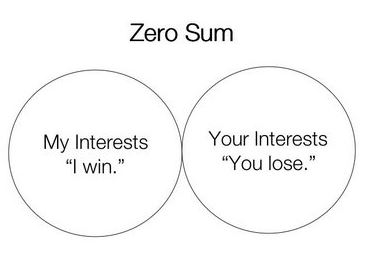
This begs the question, are freedom, justice and equality part of a zero-sum equation?  Is it impossible to raise people up without putting others down?  It would seem to me that there are some areas where a scarcity of resources means that this is true, but in the areas where we are dealing with non-tangible ideals, shouldn't we all be able to rise together? 

There are places where the two worlds overlap.  One example would be funding for education.  There are a finite amount of financial resources, qualified educators and technological supports available in the world.  We see funding becoming a large part of the struggle as different groups fight for a piece of the pie.  What is ignored is that our nation has the resources to adequately train, supply and support all students in their academic efforts.  We simply choose to fund other things.  The military budget, athletics and entertainment all sap resources away from our schools and into other venues.  We aren't putting our money where our mouth is when it comes to educating our people.

The problems are real and relatively easy to identify.  The solutions are in some ways just as simple, although not as straightforward to solve.  How do we reach a point where multiple viewpoints are always a part of our classrooms and society and we don't need a specific month or day to promote a groups contributions?  How do we reach a point where everyone feels like they have an equal opportunity and separate awards or Affirmative Action are truly no longer needed?  How do we reach a point where everyone assumes positive intentions from each other and the difficult issues can be addressed with honesty and trust?

I always tell my students that trust is one of the most important things we can have in our classroom.  If we can trust each other then we will accomplish much more than if we don't.  Once my students earn my trust I am able to give them more freedom in their studies and once they trust me we are able to work so much better together.  This is process that takes time and is a challenging one for many students. 

Unfortunately, trust is difficult to establish, but is very easy to lose.  This is just as true in the world outside the classroom as it is inside the school walls.  Trust isn't something that can be mandated, but must be earned through hard work and a demonstration of reliability.  We are beginning to realize the level of frustration and mistrust that exists in many groups in our society.  Often these are the groups that are not enjoying the same levels of success as other groups.  It stands to reason that, if you have been the object of discrimination and have a history of unequal treatment that trusting in the larger society would be a problem. 

In order to win that trust, our organizing efforts must focus on things that matter to all groups.  Too often we see organizations try and engage people on issues that are of importance to the organization.  Once again, the recall efforts, and most elections, stand out as examples.  Neighborhoods that rarely got visitors from "outside" were suddenly flooded with volunteers, knocking on doors, talking to the residents.  Asking for votes to support candidates who may, or may not remember the people who turned out to cast a ballot for them. 

This disconnect between organizations and their members isn't limited in scope.  Every individual member of a group has some level of frustration or feels underrepresented in some way.  In situations of extreme poverty or discrimination this is magnified, but we all feel like we have to struggle to make ends meet and to make our interests heard. 

One of the real struggles that unions have faced recently is the perceived need to be engaged in political issues.  Anti-labor forces have made the workplace into a political battlefield through legislation and policy designed to directly impact working conditions for unionized labor.  As a result unions have had to put significant resources into political actions that have drained financial and emotional capital.  Unions have been in a reactive mode and have scrambled to try and hold their ground.

However, in doing so it may be that unions have forgotten their roots.  Organized labor was born in struggle at a very personal level.  Workers rallied and organized to support themselves and their co-workers on issues of direct importance to them.  Political action and politics in general don't strike the same resonating chord for many members.  In other words the battles for the hearts and minds of labor is fought in the workplace and on the streets more than it is in legislative chambers.  We can't discount the need to be politically active, but you can clearly see the difference in engagement among union members when looking at the February, 2011 protests and the following two years of political action.        


It is also important for organizers to work at the personal or small group level.  We are dealing with some big issues and these are rarely addressed satisfactorily at the "macro" level.  We start changing the world at the "micro" level.  You can see that happening in classrooms across the nation where educators and families are working together to try and help a specific student succeed.  We often see families come in with "baggage" from previous educational experiences and the adults are filled with mistrust for the schools.  It takes time and a strong commitment to make change, but in doing so we can break the cycle and create hope for the future.

Face to face contact and actions committed with those we know are the most powerful.  It isn't easy to trust in a large group or in our political process on a large scale, but people are able to develop relationships with those closer to home.  The data that shows that most people don't think public schools around the nation are doing well, but who feel like their neighborhood school, or their child's educator are high quality, shows this reality well.  Even in organizations like MTI where a majority of members are supportive and engaged we see the power of individual contact when trying to mobilize our energy.  I've seen this personally at my own school and in the groups that I've been a part of over the past two years.  Making time to talk with people empowers everyone and opens doors that may have been closed previously. 

These are challenging, but exciting times.  There are the obvious threats to our rights and freedoms, but there are also the opportunities to use the conflicts to advance our society to new places.  This is virtually impossible to do through legislation, or through mandate from outside sources.  It also doesn't happen overnight.  Building a society where all are valued and all have equal opportunity takes time, effort and communication.  However, the results would make all of the hard work worth it.