
Politics…
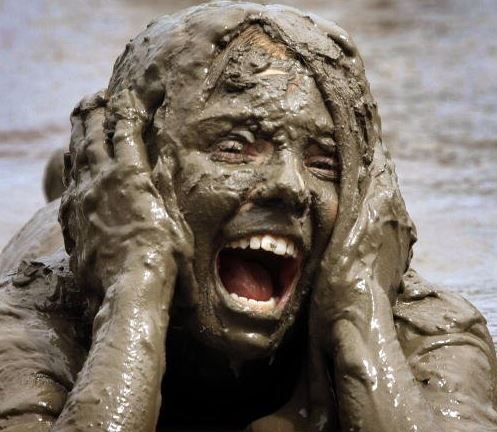
With about a month to go before the April elections
things have definitely heated up here in Wisconsin. Of course, we should expect no less from a
state that has been engaged in perpetual political campaigning for the past two
years. The tone of political discourse
in the Badger State has degenerated significantly from
issue related discourse to heated rhetoric and name calling. This is true on both sides and needs to be
addressed if we are to be able to return to any constructive, civil discourse
on issues of great importance. Our
current climate has resulted in a lack of bi-partisan actions and mirrors the
stalemate at the national level that has brought us so much turmoil and so
little in the way of progress.
Politics has always been an area where we see some
of the worst aspects of human nature rise to the surface. Mudslinging, scandal and questionable tactics
have long been a feature of political races.
Some of the less desirable strategies have the positive effect of bringing
needed information to light, but we have crossed the line in recent years and
created an environment where it is easier to do the wrong thing in order to
hold on to key constituencies and sources of financial support than it is to
take a stand for the general good.
There is enough blame for our current situation to
go around. Some responsibility lies with
the big money donators and lobbyists who peddle their influence and buy
democracy for their own interests. Some
fault lies with the politicians who surrender their responsibilities and follow
a party line or who work harder on staying in office than in representing their
constituents. We can't forget to place
some accountability on the voters themselves.
Many of whom simply don't vote and therefore allow for small numbers of
people to decide the fate of everyone.

Too many of us have surrendered our power to decide
our fate and simply bemoan the "fact" that this is the way things
have to be. That politics and
politicians are inevitably corrupt and self-serving and that the vast majority
of us must simply tolerate the reality that our government doesn't work for
us. We can't accept that as truth and
still claim to believe in the American version of democracy and the ideals of
freedom. Instead of passively allowing
our lives to be governed by those who would rule in their own self-interests,
we must begin to do the hard work of becoming Citizens and not just people who
happen to live in the United
States.
Citizens are active participants who gather information, voice their
opinions and make themselves heard.
Something each of us must do in order to restore true democracy to Wisconsin.
Supreme Court races in Wisconsin have been a
prime example of what is wrong with our current situation. Voter turnout has typically been extremely
light, the influence of special interests has been obvious and the level of
discourse around the election has been low.
This year we face another election where most people will simply go out
and vote along partisan lines. It
wouldn't be a stretch to assume that most voters really have very little idea
who the candidates are and what they stand for.
We also know that incumbents have a distinct advantage in these types of
elections, so unless Fallone is able to find a way to reach a significant
number of voters this race will be very difficult for him to win. The race is not necessarily a referendum on
Walker or the GOP in Wisconsin,
but rather a referendum on whether the status quo will remain in place
here.
I continue to find it
troubling that our justices are making decisions based on the intent of the
legislature and not on the Constitution.
To me that seems like a weakening of the separation of powers and the
checks and balances system that helps protects our rights. A legislature, often elected by a small
number of citizens, can by declaring its intent write laws that they should
know don't represent the views of the people.
How many of our elected
representatives were elected based on the platform of harming the environment? Yet, Tom Tiffany, R-Hazelhurst says, when
speaking about the mining bill, “If the law is challenged and ends up in court,
the judge needs to know it was the Legislature’s intent to allow adverse
(environmental) impacts. That way, a judge can’t find fault if the environment
is impacted.” Justice Roggensack has
repeatedly stated that she will uphold laws like the mining bill or, it's
relatively safe to assume, Act 10 because of legislative intent. In doing so, I believe she becomes an
extension of the GOP controlled legislative and executive branch and not a
member of an independent judiciary.
The race for State
Superintendent of Schools will also feature partisan politics without much
substance. In this case Tony Evers is
the incumbent and will be faced by an opponent who is calling for radical
"reforms" of our public schools.
Evers has spoken out in defense of public education and is the best
choice for those who value public education in Wisconsin.
Usually school board
elections don't muster up much in the way of political attention, but this
year's Madison
school board races have been anything but typical. The race for Seat #5 has garnered most of the
attention because of the withdrawal or the primary winner just 2 days after the
February primary. Add to this confusion,
the current budget proposed by Governor Walker that advocates the expansion of
the voucher system into districts like Madison and we are seeing an unusual
level of conversation around the three school board races.

Once
again there is a high level of misinformation and partisan talking points are
drowning out meaningful conversations about the Achievement Gaps, school
reforms and parental choice in schools.
Voters will need to sift through a large amount of information and
propaganda to uncover what the candidates actually believe and what the future
they see for Madison's
public schools looks like. The issues of
student achievement and other educational issues are extremely complex and
deserve our full attention as well as extensive coverage by all media outlets.
In all three races it is
important for voters to find trusted sources, listen to the candidates,
investigate the candidates records and avoid falling prey to the distortions
and manipulations of advertising and partial reporting of facts. These are high stakes elections for our
students and our public schools.
Not
My Wisconsin…
Here in Wisconsin we have a state that is fairly
evenly divided between political ideologies.
When you look at the recent electoral results you see a state that is
not consistent in it's support of a specific party or philosophy. Yet, the trends in our legislation and public
policy lean heavily towards extremely conservative thinking. This disconnect between the people and our
elected representatives is widening and a source of increasing frustration
among the people of Wisconsin.
Governor Walker's recently
unveiled state budget is an example of how far to the right our government has
swung. While claiming to be less
controversial and more moderate in tone, the reality is that this budget is
every bit as extreme as the one that caused all of the tumult in 2011. In addition to the budget there are other
equally disturbing things that our current crop of conservative legislators are
planning to send to Walker's desk for his stamp of approval.

All that is missing is a
catalyst like Act 10 to revive the massive protests from two years ago. Or, maybe, the people of Wisconsin have seen that large scale
protests will have little impact on the actions of our well insulated leaders
and are trying to resist in other ways.
After the outpouring of dissatisfaction in 2011 that lead to the massive
recall efforts, Wisconsinites have continued their organizing and are working
together to resist the wave of conservative "reforms" that have swept
our state.
Public education has long
been a source of pride for many citizens of the Badger State. We know that we don't have a perfect system
for everyone, but our public schools have the potential to be a great equalizer
of opportunity for all citizens. In
addition our public schools are home to a powerful political force in the form
of our public educators and their unions.
In 2011 the GOP leaders in Wisconsin
opened an all out assault on public education and the 2013 version of
conservative leadership is continuing these attacks.
Officials express outrage at
governor's proposal for schools | Superior Telegram | Superior, Wiscons
Expanding vouchers, not
increasing per pupil revenue limits and further constraining the ability of
school districts to balance their budgets without draconian cuts is the latest
in the continuing efforts of Wisconsin Republicans to destroy public education
in our state. The savings garnered from
punishing public educators have been used up and now districts are forced to
find other ways to balance budgets that are threatened by reductions in state
and federal aid.
These efforts to undermine
our public schools are so extreme that they are forcing some members of the GOP
to rethink their support of the proposals.
Many of us saw this
headline with a great amount of sadness.
He may be corrupt and unethical, but apparently not enough of either to
generate an indictment.
No
Apologies…
No
question that these are bleak days for public educators. However, even with all that is happening, the
public educators of Wisconsin are continuing with our efforts to try and serve
our students, families and communities as best we can given the current
conditions we work under. We know that
there is much work to do, but we embrace the challenges and have hope for a
future where all students are supported and given the best opportunity to
achieve in public schools that are fully supported financially and
politically.
I
don't apologize for being an educator.
In fact I find myself feeling more pride in my profession now, than I
ever have. I don't need the sympathy of
anyone because my job is difficult, my pay is shrinking and my profession is
frequently maligned. I know that
everyone faces challenges in their jobs, and that life is difficult for
families across our state and our nation.
Instead of asking for pity I am hoping that all citizens can look at
each other with empathy and begin to find commonalities that we can use to
build cooperation and to create a society where all people have hope for the
future and equal opportunities for success.
I
believe that public schools are one of the best vehicles for us to achieve a
socially just society. That they haven't
succeeded in this goal is as much a fault of everyone as it is public educators
and the public education system.
A few examples of why our schools don't work for everyone…
Our goals are skewed, our
measurements are flawed and those with the most find ways to manipulate the
system to increase their chances for success. One of the criticisms of our
public schools is that they don't identify and support talented students from
different demographic groups. We find
our administrations looking to testing companies to help identify
students. Yet, it isn't any surprise that
there will be companies (often with ties to those that design the tests) who
will then create test preparation programs designed to help students perform
well, even 4 year olds.
I've written extensively
on the dangers of our system of testing students and defining success based
entirely on a series of standardized test results. We criticize our schools for failing to be
culturally sensitive to our students and then evaluate their performance (and
their school's performance) based on culturally biased tests. To quote Diane Ravitch speaking about Common
Core standards and testing, "(The combination of Common Core and changes
in testing will)
have a disparate impact on
students who are English language learners, students with disabilities, and
students who are poor and low-performing."
We are claiming to be implementing "reforms" that will improve
our schools, when in fact we are too often doing the opposite.
We often have the wrong people making
decisions for our public schools. For example, the Common Core standards are
currently being touted as the way to fix our education system. However, to again quote Diane Ravitch, "They
were developed by an organization called Achieve and the National Governors
Association, both of which were generously funded by the Gates Foundation.
There was minimal public engagement in the development of the Common Core.
Their creation was neither grassroots nor did it emanate from the states."

Too frequently we have
"outside experts" come in to "fix" our schools. These "experts" often have little
if any experience in a classroom and often are connected to groups that stand
to profit from the "reforms" that are suggested.
Most
people have a very inaccurate view of what educators do and the conditions that
we work in. The news from major districts across the nation is
horrifying. Recently educators in
Philadelphia were offered a new contract that cut pay, increased out of pocket
costs for health coverage, increased the workload and hours, suggested that
teachers, "would also have to lead professional development, attend
meetings, perform bus, yard and lunch duty and be available for parent meetings
outside work hours with no extra pay."
Stick it to the educators? There
are those who would support that, but it is also the kids who are harmed when
class sizes are increased, support staff like librarians and social workers are
cut and curriculum is weakened in order to increase test scores.
Education has become one of the
central political issues that divides us.
Somewhere along the road we
managed to lose focus on what exactly our public schools should be all
about. The fight to improve public
education isn't about power for educators or public sector unions. If that was the case then we would see many
more strikes and job actions given the current state of working conditions for
most educators.

Educating
our young people shouldn't be controversial.
We shouldn't be fighting over nickels and dimes just so a few people can
make dollars off of our students and our schools. It is a travesty that there are those who
would actively seek to destroy our schools, just so that they can make a profit
or increase their political power. Our
politicians treat education like it is a zero-sum game, that is to say that
there is a finite amount of "education" to go around and we need to
control how it is "given" to the public. In reality we can educate all people well, if
we, as a society, decide that is something that is of value.
It
shouldn't surprise us that there are people who are willing to use children's
futures for their own gain. Education
has been wielded as a weapon throughout history, either used as a
"carrot" to reward groups or withheld from specific groups out of
fear or as a punishment. People have
been excluded from educational opportunity because of race, religion, gender,
income or virtually any other definable characteristic. The history of public education is one of
incremental change over time. We are
currently in an era where the change is moving in the wrong direction. Schools are becoming more segregated, control
is more centralized and education is seen more as career building than life
improving.
With
all of that going on, why would I (or anyone) be proud to be an educator? Why not just give up and allow the "reformers"
to control the educational system here in the U.S.? What hope is there for the future of public
education when the debate has been framed in such a way as to virtually
guarantee failure for public schools?
I
go to work every day in a public school where I see educators working hard to
try and give students every imaginable opportunity to succeed and to build the
skills they will need for the future. I
am a part of several groups that are working to build connections between
different parts of our community and to share the positive things that are
happening in our public schools. I know
that there are many great people working to try and change the focus of the
discussion away from one that seeks to find deficits to one that looks for
strengths to build upon.
Our
nation needs public schools in order to continue as a democracy and to unify
our society. Without integrated public
schools we become a nation of separate (and unequal) groups who see each other
as opponents as much as fellow citizens.
We can already see how the weakening of our public schools creates a
stratified class system in many places.

I
am proud of my fellow educators who work all day with students and who find
time to advocate for our schools as well.
There are those who argue that educators should be non-partisan. That would be the case if public education
wasn't being used as a political football.
Educators are fighting for our public schools just like businesses lobby
for their interests. I don't apologize
for those who advocate for public education and educators. Especially those who are former educators
themselves. Why should the voice of
educators be absent from public discourse about public education? The major difference I see is that public
educators are advocating for the good of many and not a specific special
interest. We are working to open up
dialog across boundaries that have traditionally separated some students from
educational achievement.
Can
we do a better job of educating all of our students? Of course we can. No system ever has, or probably ever will, be
able to guarantee that every student will achieve at their highest possible
level. What we can do is our best to
make sure that every pupil is given a fair opportunity. How we go about doing this is not static, and
change is a part of education. If we had
all the answers, then there wouldn't be any controversy.
So
amidst all of the strife and turmoil there is hope. Public education and public educators have
been a part of the fabric of our society for a long time and we are not giving
up our place without a fight.


